
Frameworks
A framework is a library of controls that drives your compliance assessments, such as the EU AI Act or ISO/IEC 42001. Enabling a framework applies its controls automatically to any AI asset whose region, deployment, or risk class falls in scope, so you don’t have to manually track which regulations apply to which assets.Why It Matters
Regulatory requirements for AI vary by region and by how an asset is used. Frameworks give you a way to manage that without tracking it by hand:- Coverage is calculated automatically. Once a framework is enabled, Collate scopes it to the right assets and tracks how many of its controls are met.
- Built-in frameworks cover the major regulations, so you don’t have to build a controls library from scratch for common standards.
- Custom frameworks handle what’s specific to you, such as an internal AI acceptable-use policy or an industry standard not covered out of the box.
Access Frameworks
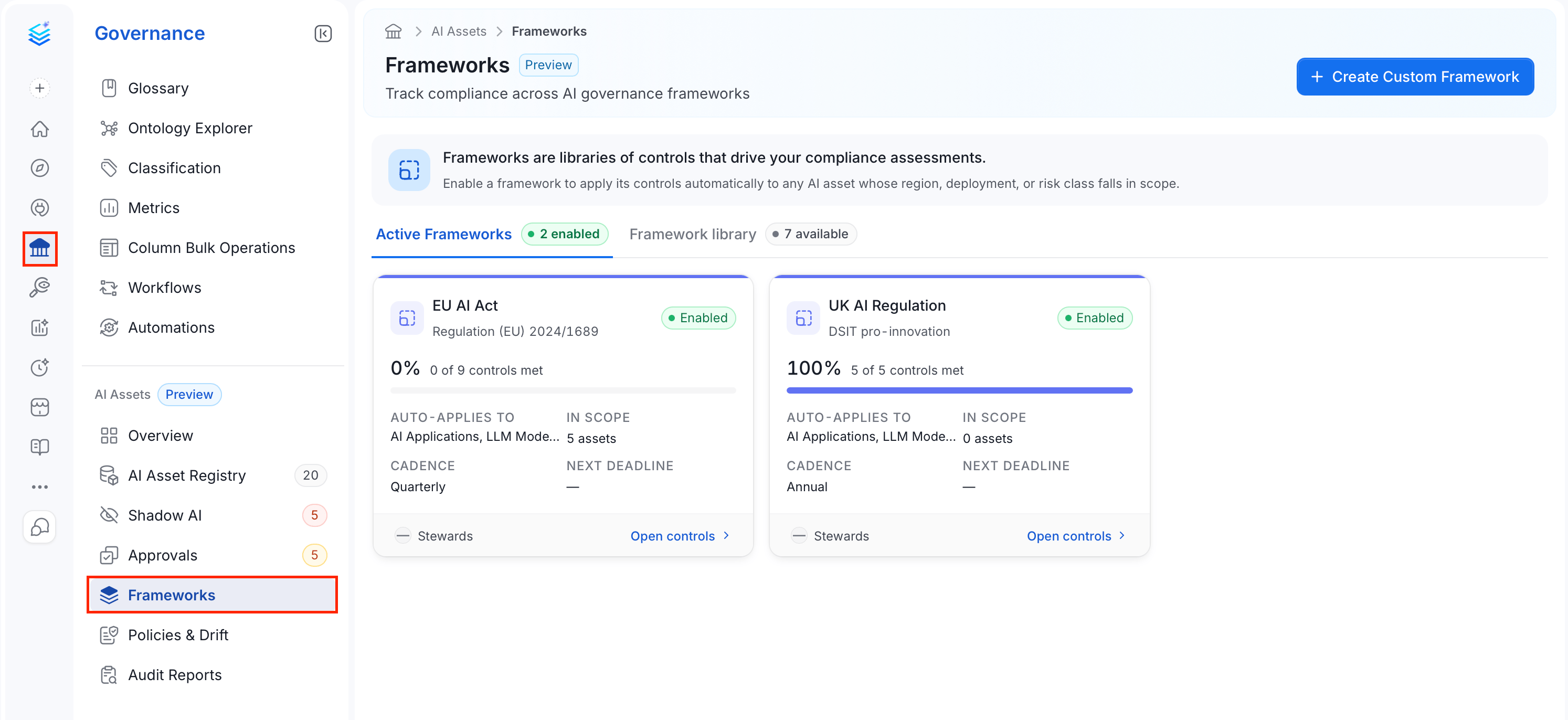
- In the left navigation bar, select Governance.
-
Under the AI Assets section, select Frameworks.
Creating a Custom Framework
-
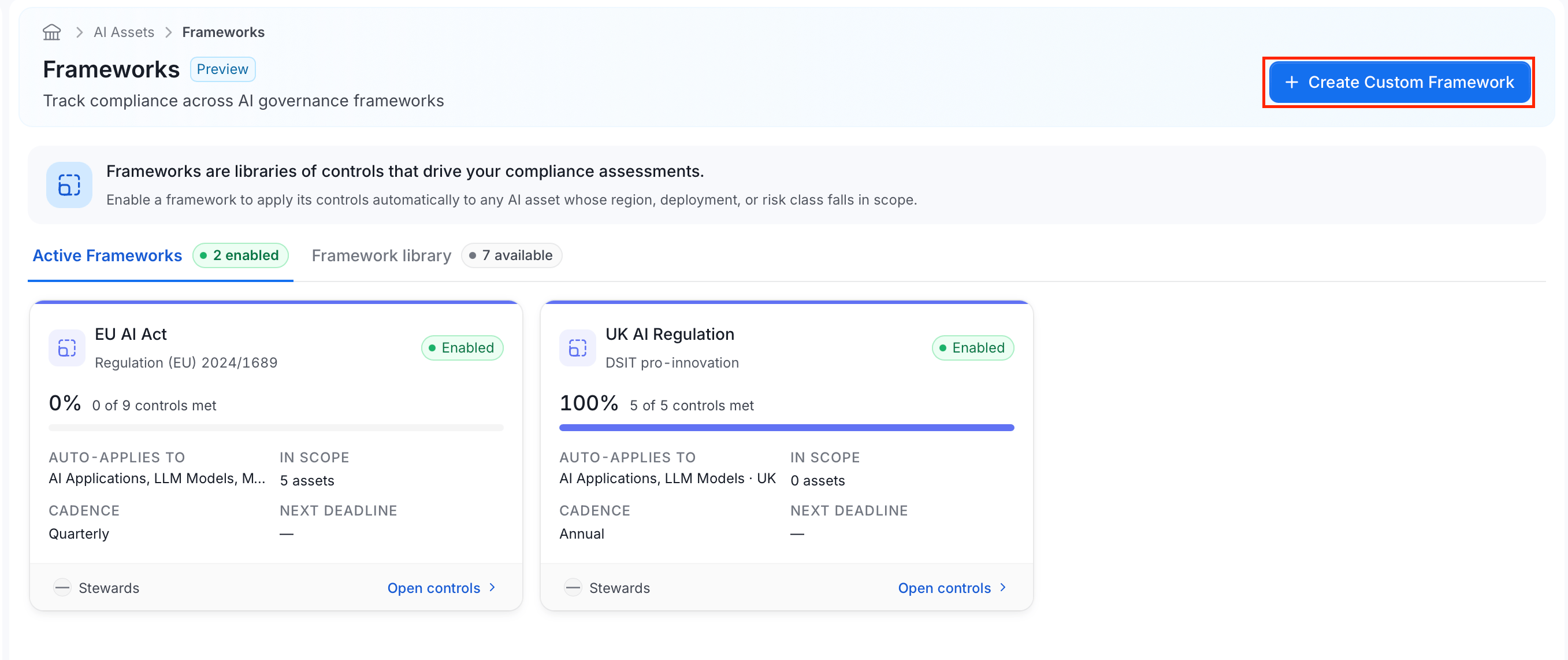
On the Frameworks page, click Create Custom Framework to build one for a policy or standard that isn’t in the library.
-
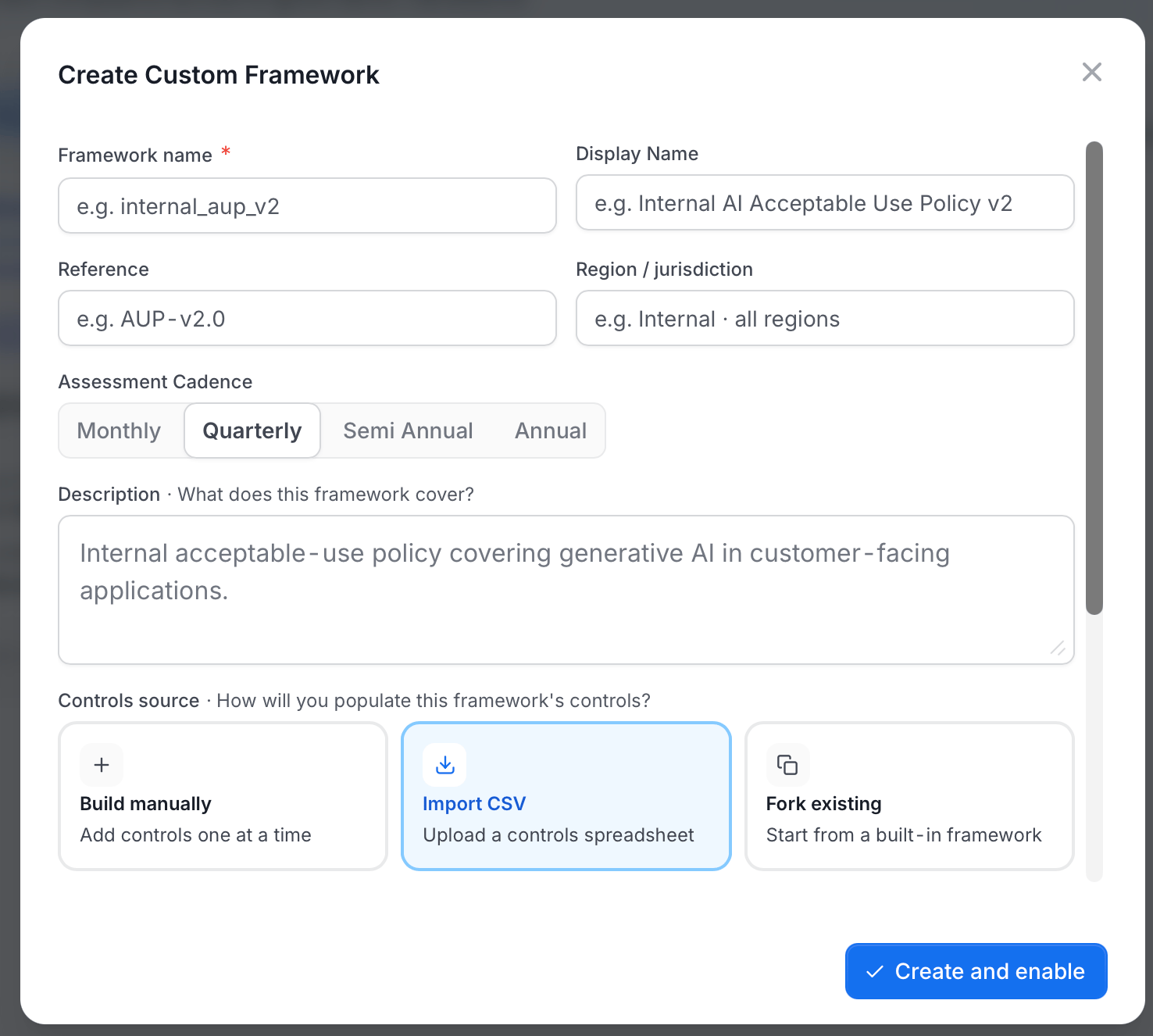
On the Create Custom Framework dialog, do the following:
- Enter a Framework name (required) and an optional Display Name.
- Enter a Reference. A citation or version identifier for the policy or standard this framework is based on, such as an internal document name or an external standard’s version number. For example, “AUP-v2.0”.
- Enter a Region / jurisdiction. A free-text label describing where or to whom this framework applies. This is descriptive only. It doesn’t control scoping on its own. Use the Regions auto-apply rule below for that. For example, “Internal · all regions” for a company-wide policy that isn’t tied to a specific country.
- Select an Assessment Cadence: Monthly, Quarterly, Semi Annual, or Annual.
- Enter a Description of what the framework covers.
-
Choose a Controls source:
-
Set Auto-apply rules to define which assets this framework should cover. Each rule defaults to “Any” until you edit it:
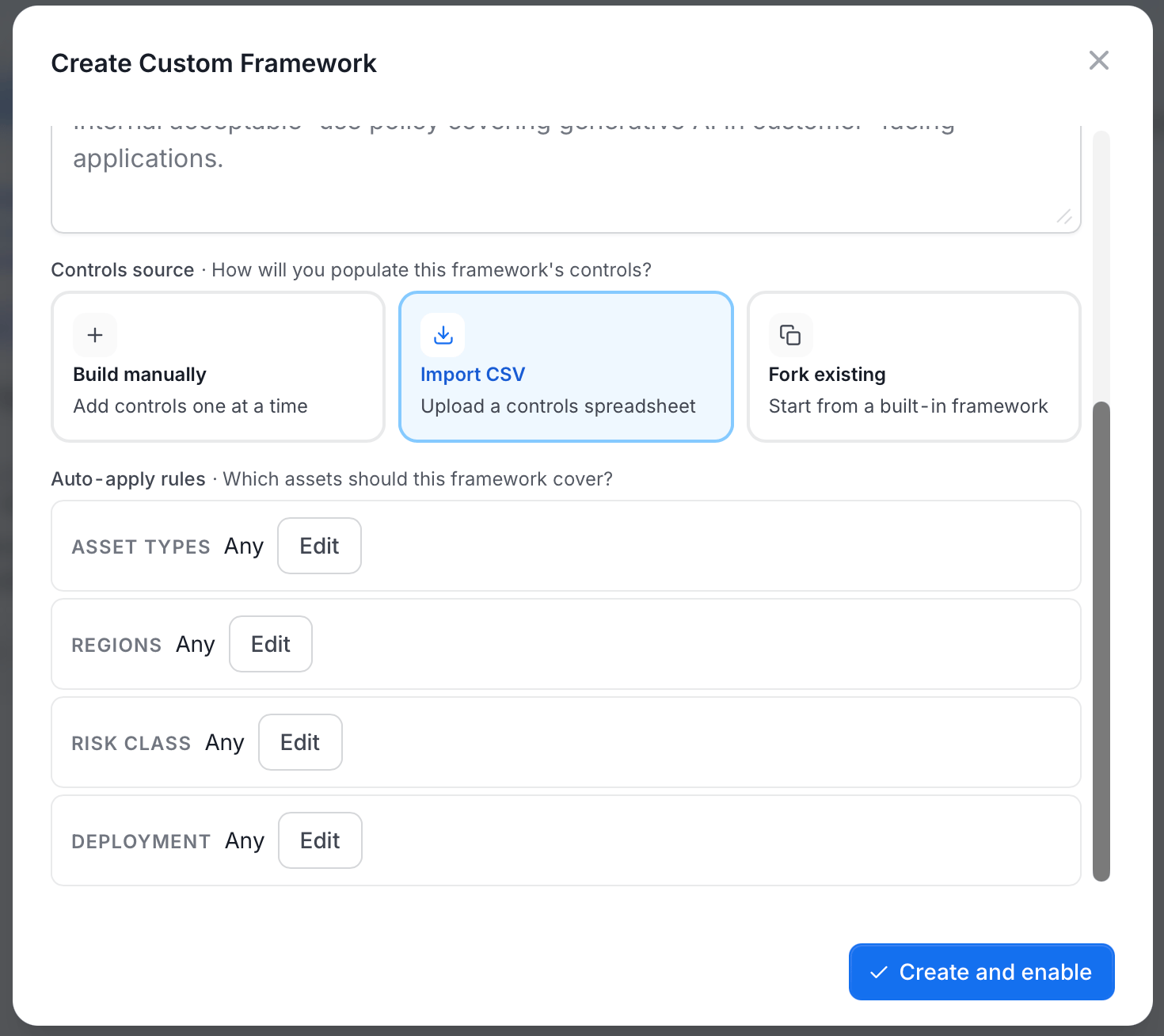
- Click Create and enable to save the framework.
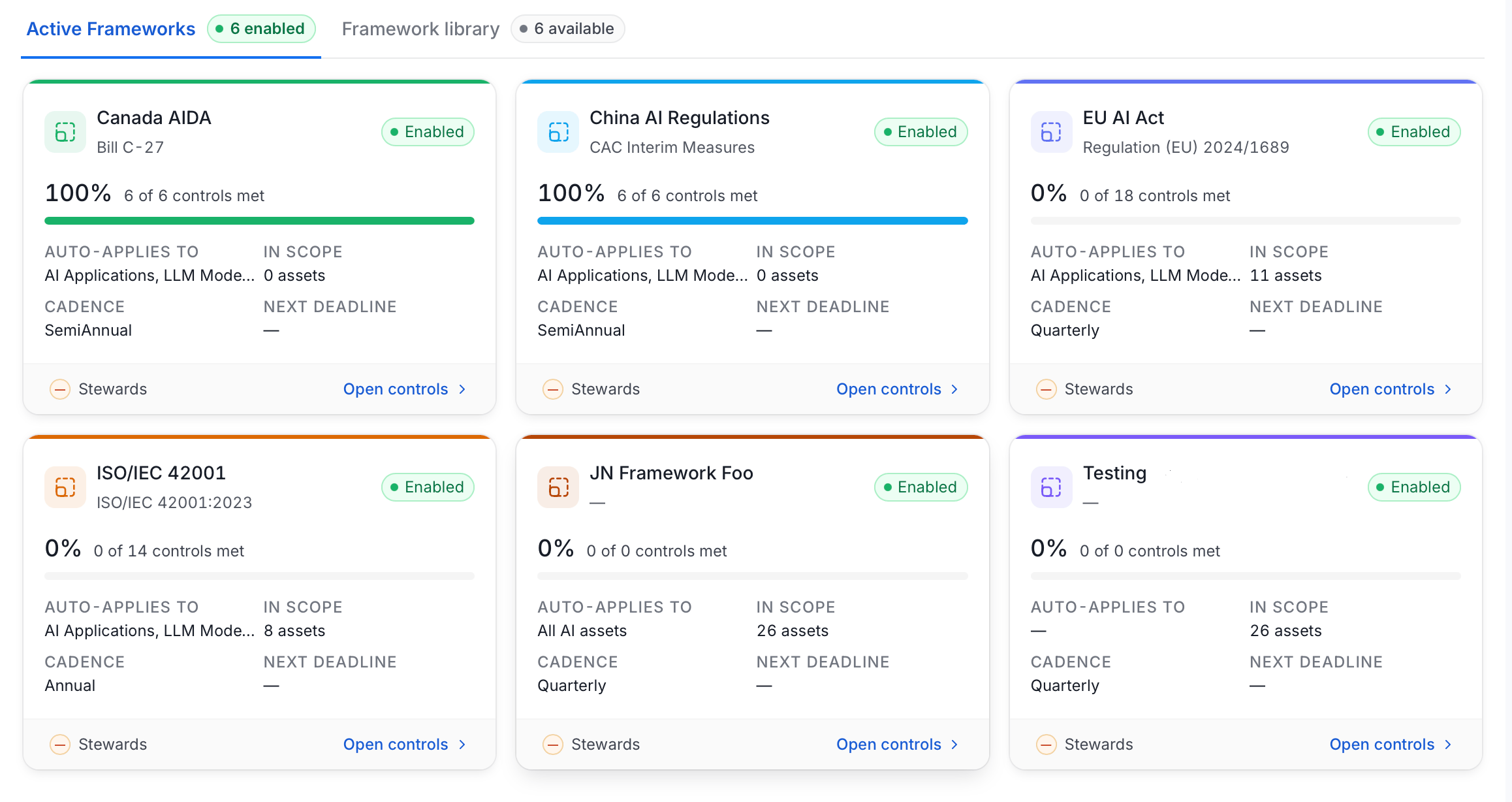
Active Frameworks
Each enabled framework appears as a card showing:- Its name and reference (for example, “Regulation (EU) 2024/1689” for the EU AI Act).
- A coverage percentage and controls-met count (for example, “0 of 18 controls met”).
- Auto-applies to: Which asset types and regions the framework’s controls apply to.
- In scope: How many of your assets currently fall under this framework.
- Cadence: How often assessments are expected. The card shows
SemiAnnualfor the Semi Annual form option. - Next deadline: The date of the next scheduled assessment, if one is set.
- Stewards: Who’s responsible for this framework, if anyone has been assigned.
Framework Library
The library starts with nine built-in frameworks you haven’t enabled yet: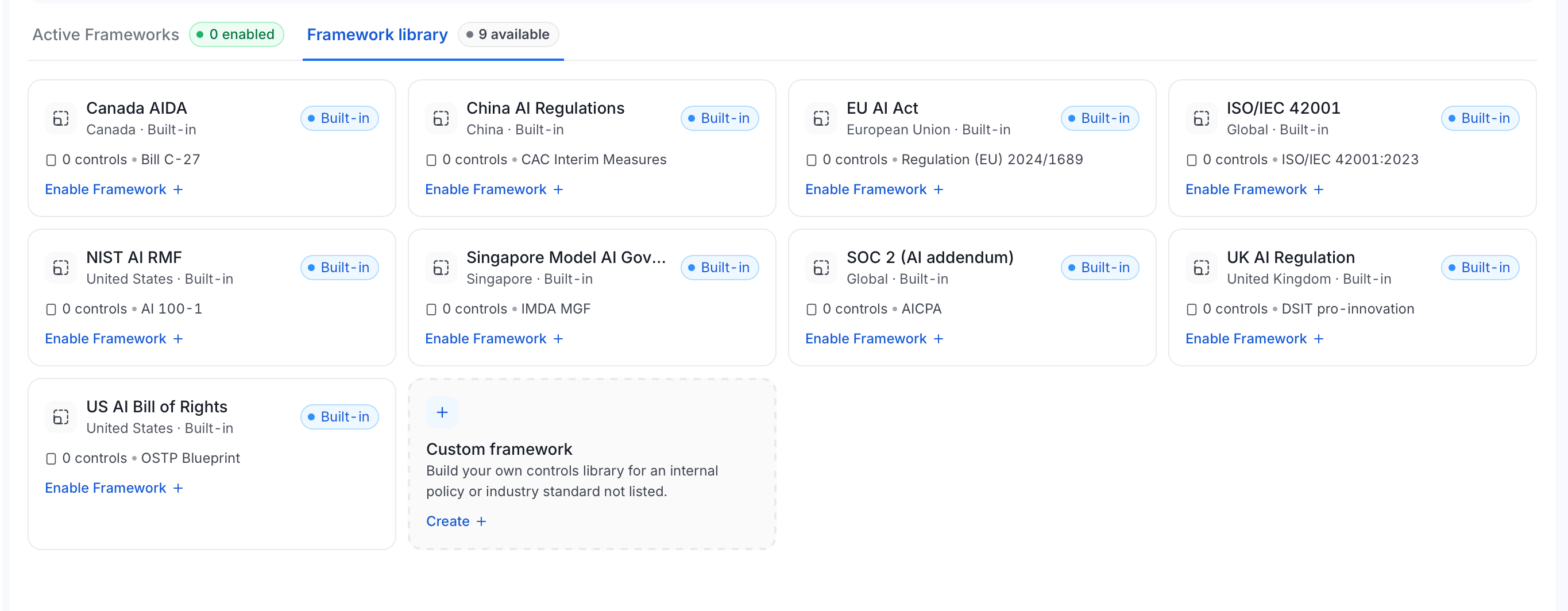
Framework Detail
Select a framework to open its detail page: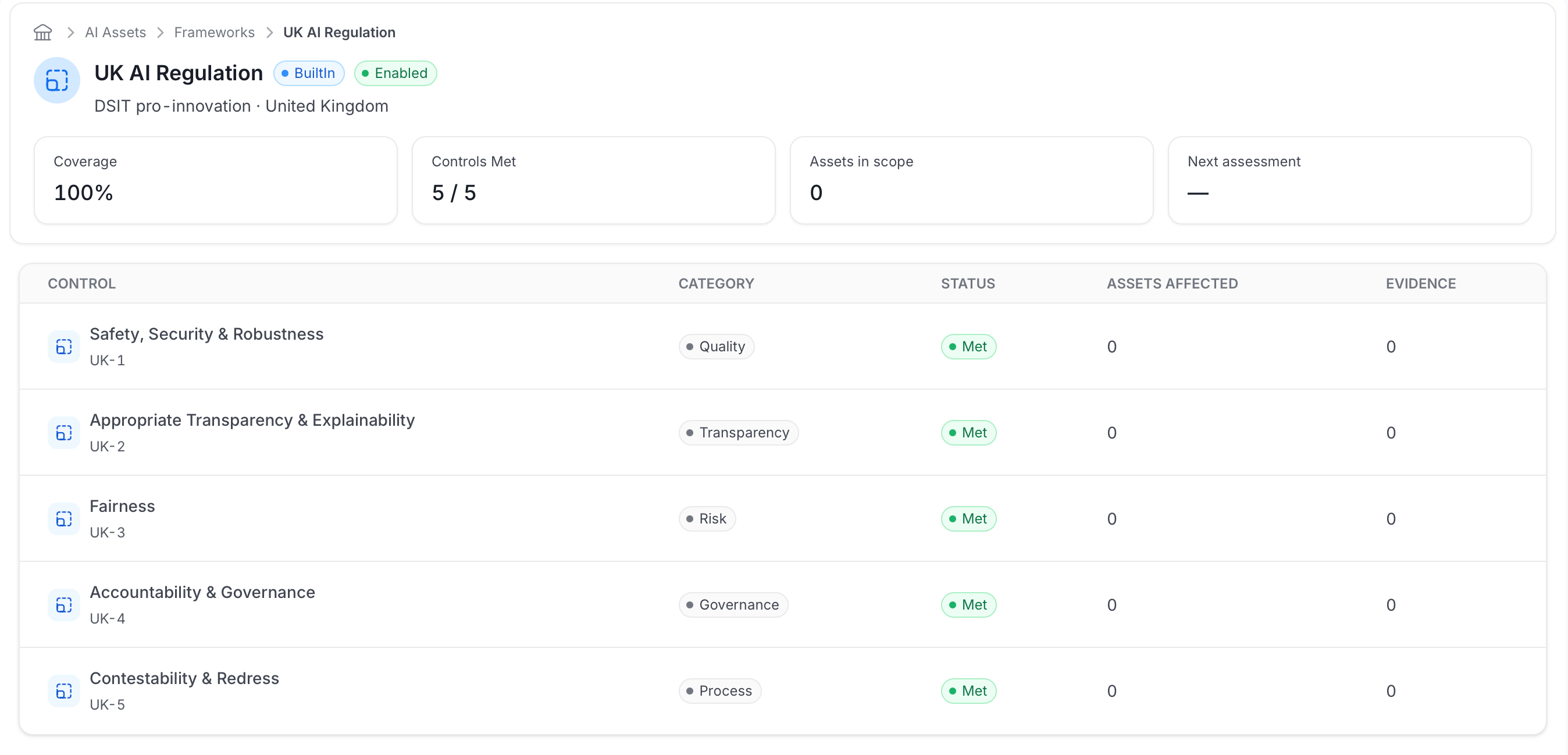
- Control: The control’s name and short code (for example, “Safety, Security & Robustness” / UK-1).
- Category: What kind of control it is, such as Quality, Transparency, Risk, Governance, or Process.
- Status: Whether the control is currently Met.
- Assets Affected: How many of your assets this control applies to.
- Evidence: How many pieces of evidence are attached to support this control.