
Tag Approval Workflow
Overview
The Tag Approval Workflow ensures that new or modified tags meet required metadata standards before they are approved for use in the data catalog. This workflow validates essential tag information, routes qualifying tags for human approval, and updates their status accordingly. By enforcing validation and approval steps, the workflow maintains high-quality, well-governed tagging across the organization.How the Workflow Works
-
Initial Tag Validation
When a tag enters the workflow, it is first checked for required metadata fields:
- A valid Display Name
- Assigned Reviewers
-
Metadata Validation Outcome
- If both requirements are met, the workflow continues.
- If either requirement is missing, the workflow stops and the tag status is set to Rejected.
- Status Update: IN REVIEW For tags that pass the initial validation, the workflow automatically updates the tag’s status to IN REVIEW.
- User Approval Step A designated reviewer receives an approval request to evaluate and approve or reject the tag.
-
Approval Decision Handling
- If the reviewer approves the tag, the workflow updates the tag’s status to Approved.
- If the reviewer rejects the tag, the workflow updates the tag’s status to Rejected.
- Workflow Completion The workflow ends after the final approval or rejection status has been assigned.
Workflow Diagram
Below is the visual representation of the Tag Approval Workflow: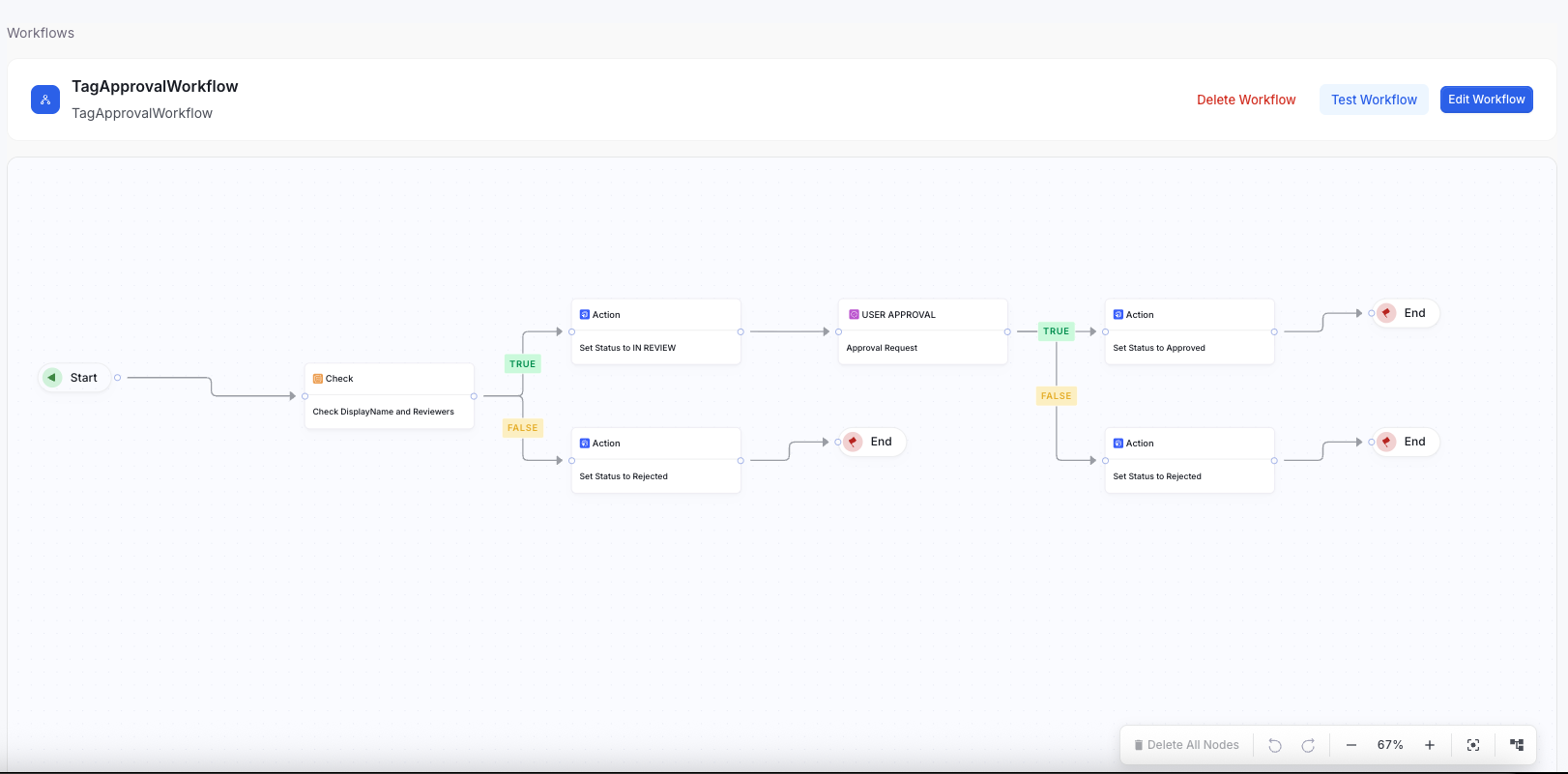
Key Features
- Automated metadata checks for essential tag fields
- Automatic workflow-driven status updates (IN REVIEW → Approved/Rejected)
- Human-in-the-loop approval step
- Quality assurance for new and updated tags
- Consistent governance enforcement across tagging activities
Example Outcomes
Why This Workflow Matters
- Ensures tag consistency and accuracy across the catalog
- Prevents low-quality or incomplete tags from entering production
- Provides clear approval tracking for data stewards
- Maintains taxonomy and governance standards
- Reduces manual oversight through automation