
Table Documentation Tiering Workflow
Overview
The Table Documentation Tiering Workflow is a data governance automation designed to evaluate and certify tables based on the completeness of their column descriptions. By measuring metadata quality at the column level, the workflow assigns a tier (Tier1, Tier2, Tier3, Tier4) that reflects the maturity of each table’s documentation. This ensures consistent metadata standards across the organization and helps identify documentation gaps that need improvement.Scenario
A data governance team needs a consistent way to measure documentation quality across thousands of tables in the enterprise data platform. Different teams provide varying levels of column descriptions, making it difficult to assess metadata completeness, enforce standards, and prioritize improvements.How the Workflow Works
- Table and Column Evaluation The workflow scans each table and inspects all of its columns.
-
Validation of Required Metadata
For each table, the workflow checks whether:
- Table contains a description
- Required owners are present If either condition is not met, the workflow terminates for that table and no certification is assigned.
- Priority Type Check The workflow verifies that the table’s Custom Property: Enum Priority Type is set to Priority. If not, the workflow ends for that table.
- Documentation Completeness Calculation For eligible tables, the workflow calculates the percentage of columns that have complete descriptions.
-
Tier Assignment
Based on predefined completeness thresholds, the workflow assigns a certification tier:
- TIER1 — 100% of columns documented
- TIER2 — ≥ 75% documented
- TIER3 — ≥ 50% documented
- TIER4 — < 50% documented
- Tier Update The assigned tier is written back to the catalog or metadata store for visibility and governance reporting.
Creating the Workflow
Here is a video Illustrating the creation of Table Documentation Tiering Workflow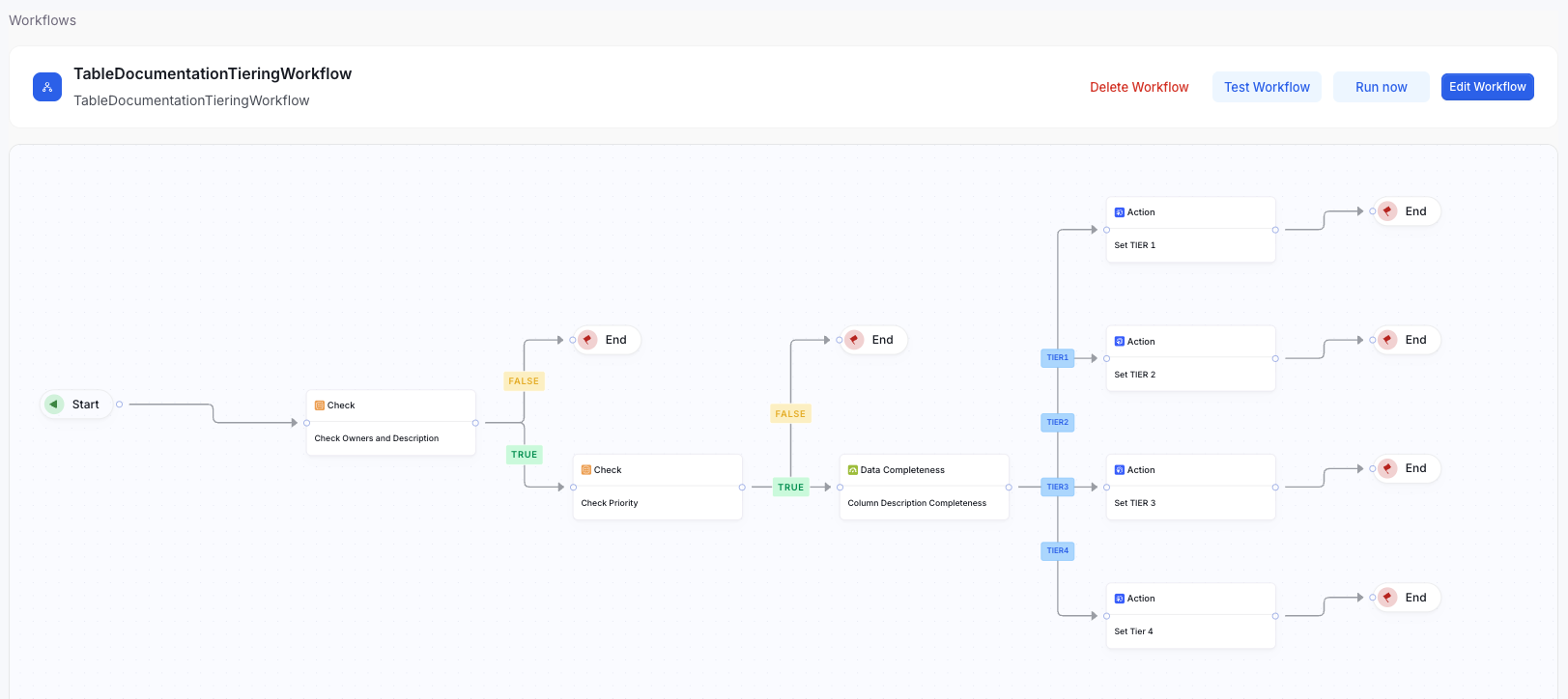
Example Tables and Results
Below are the sample tables used in the demonstration:Before Workflow Execution
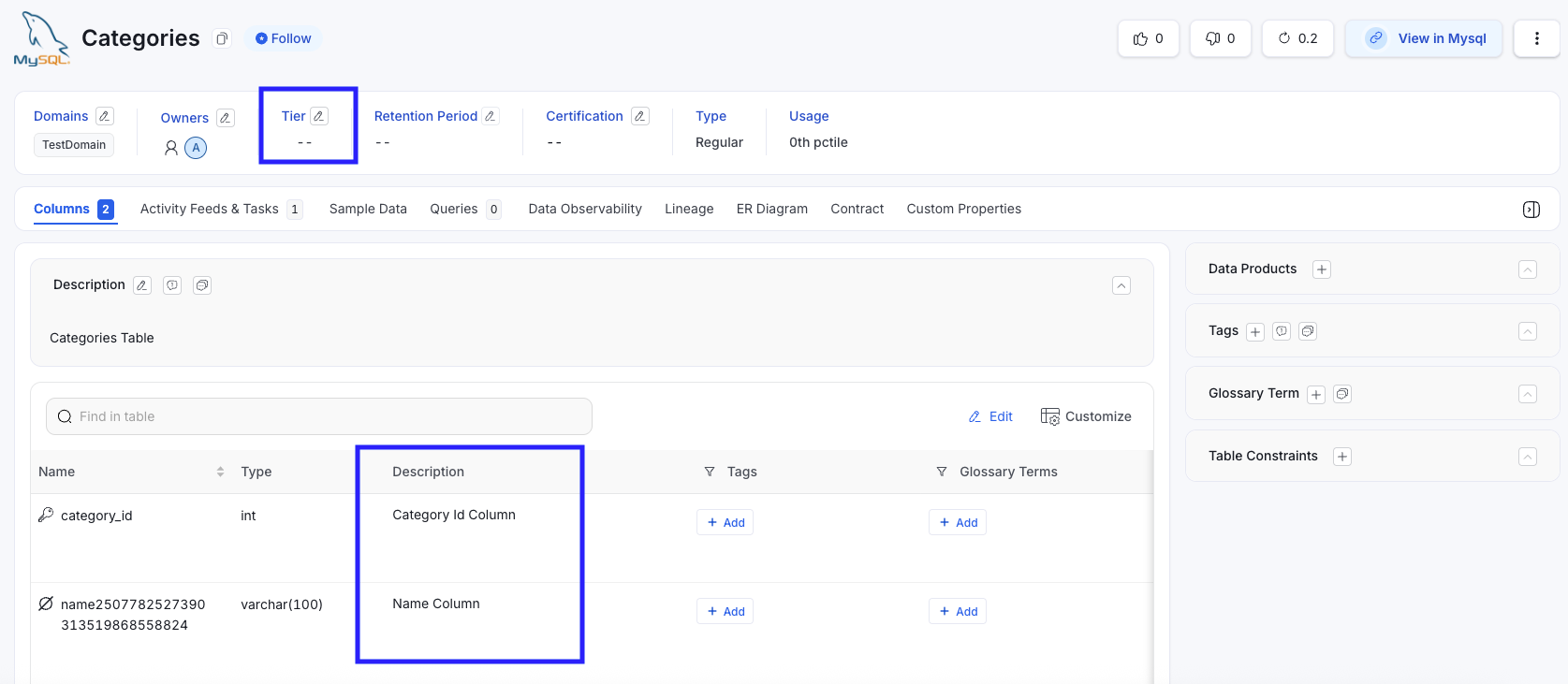
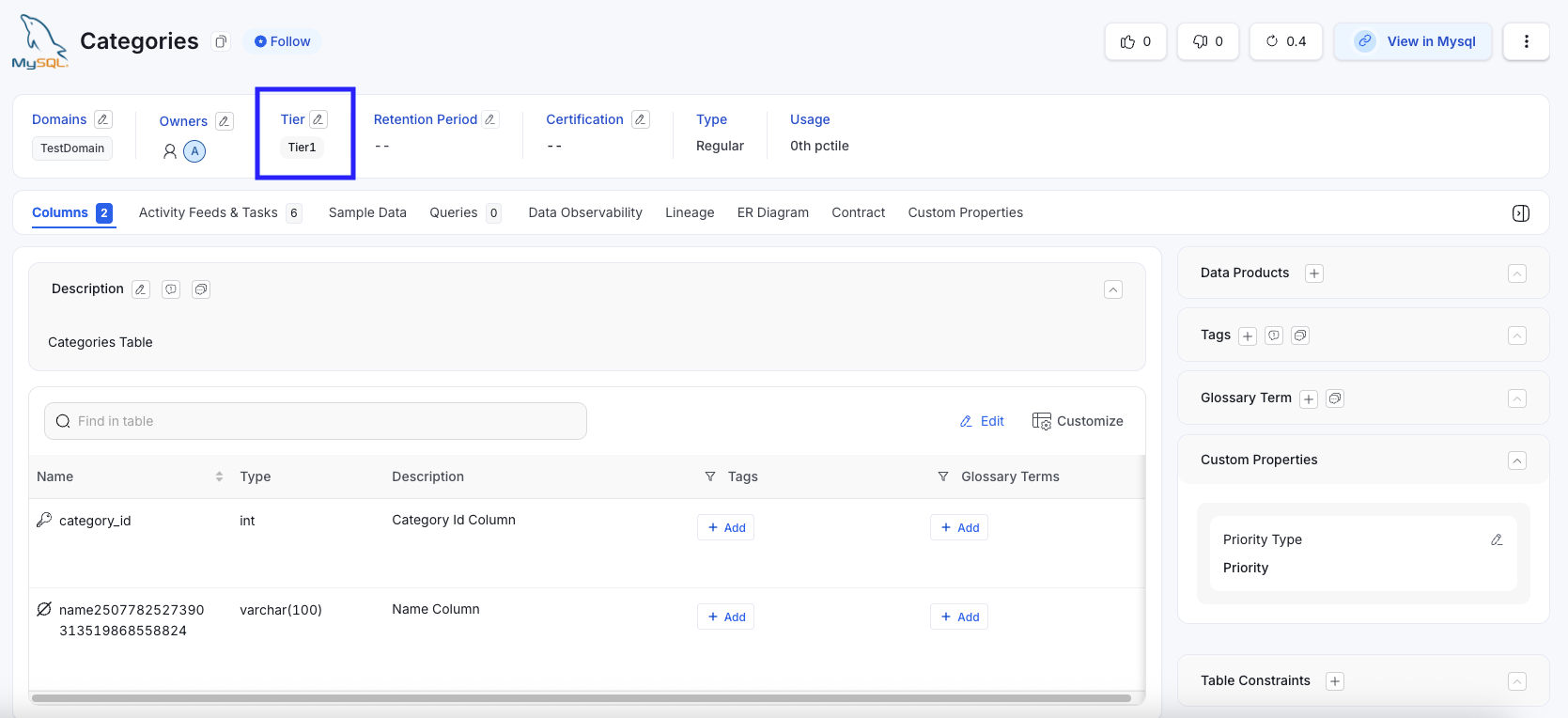
The initial state of the tables shows missing and incomplete descriptions.Categories Table (Before) - All Columns have description
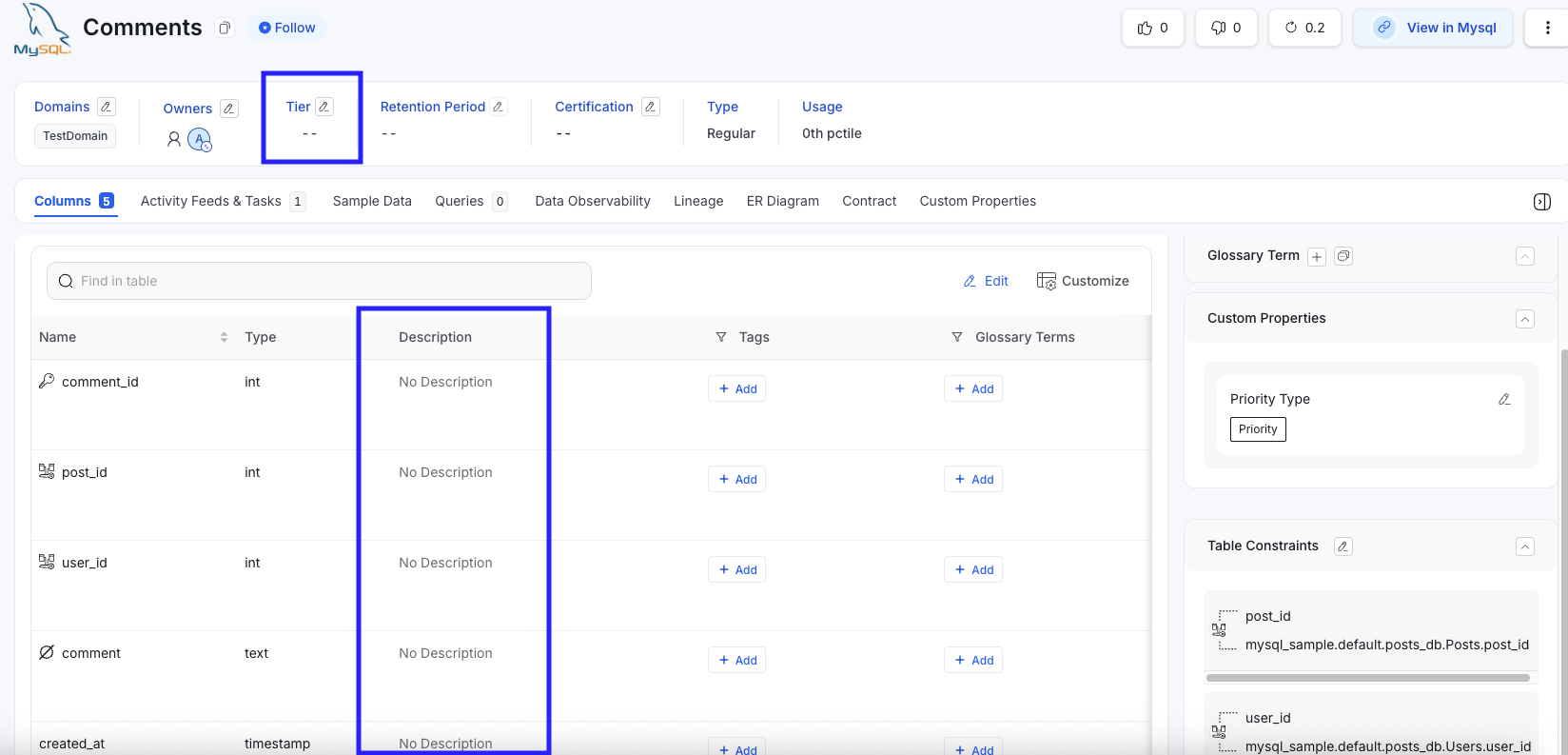
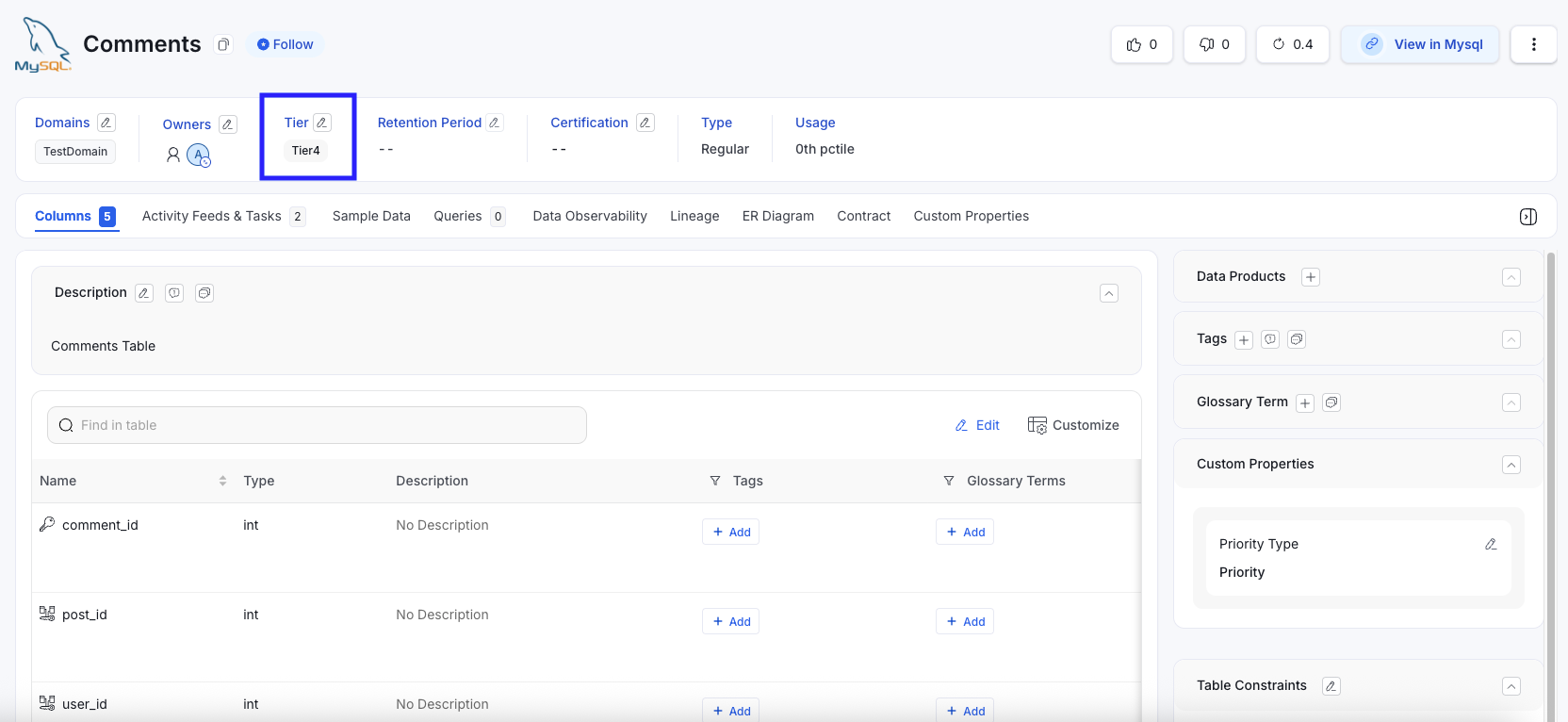
Comments Table (Before) - No Columns have description
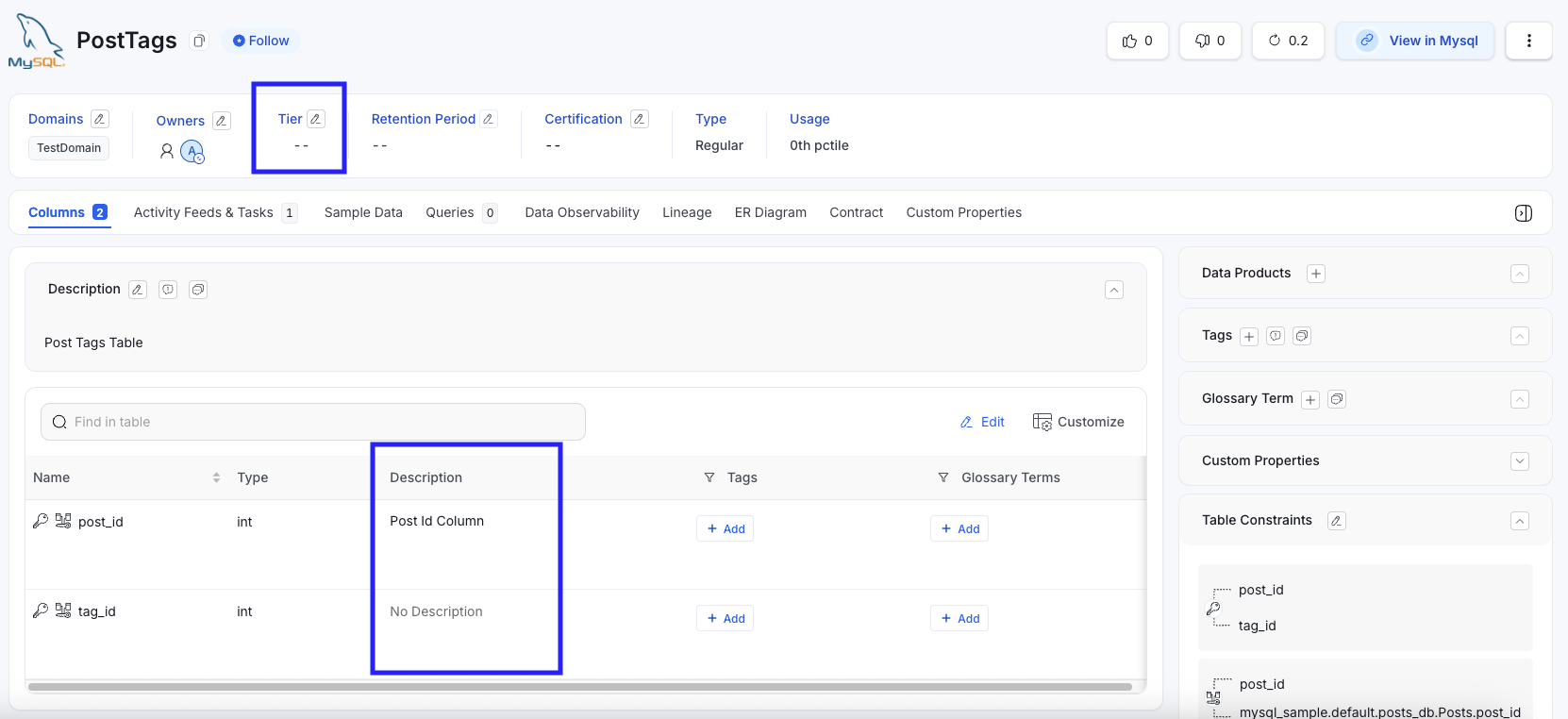
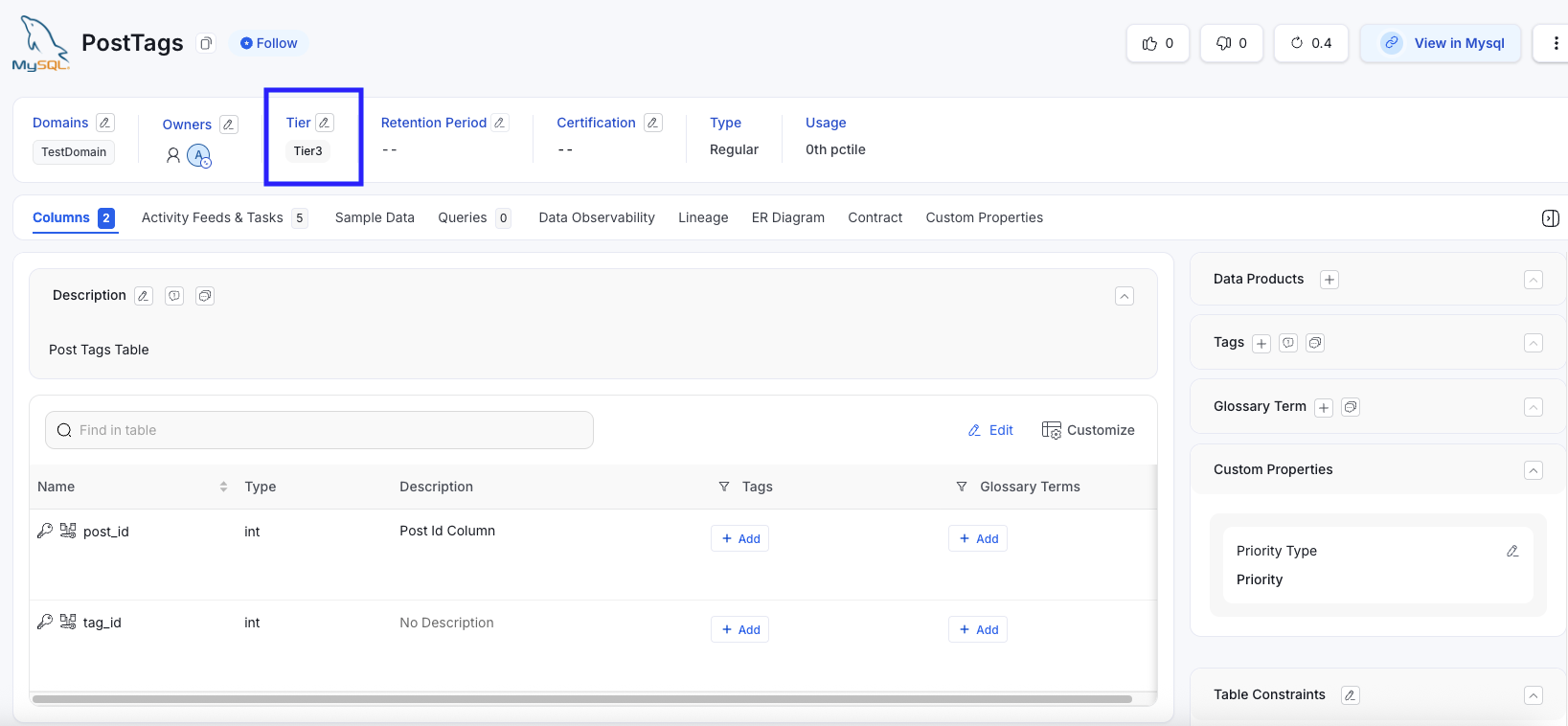
PostTags Table (Before) - 1/2 columns have description
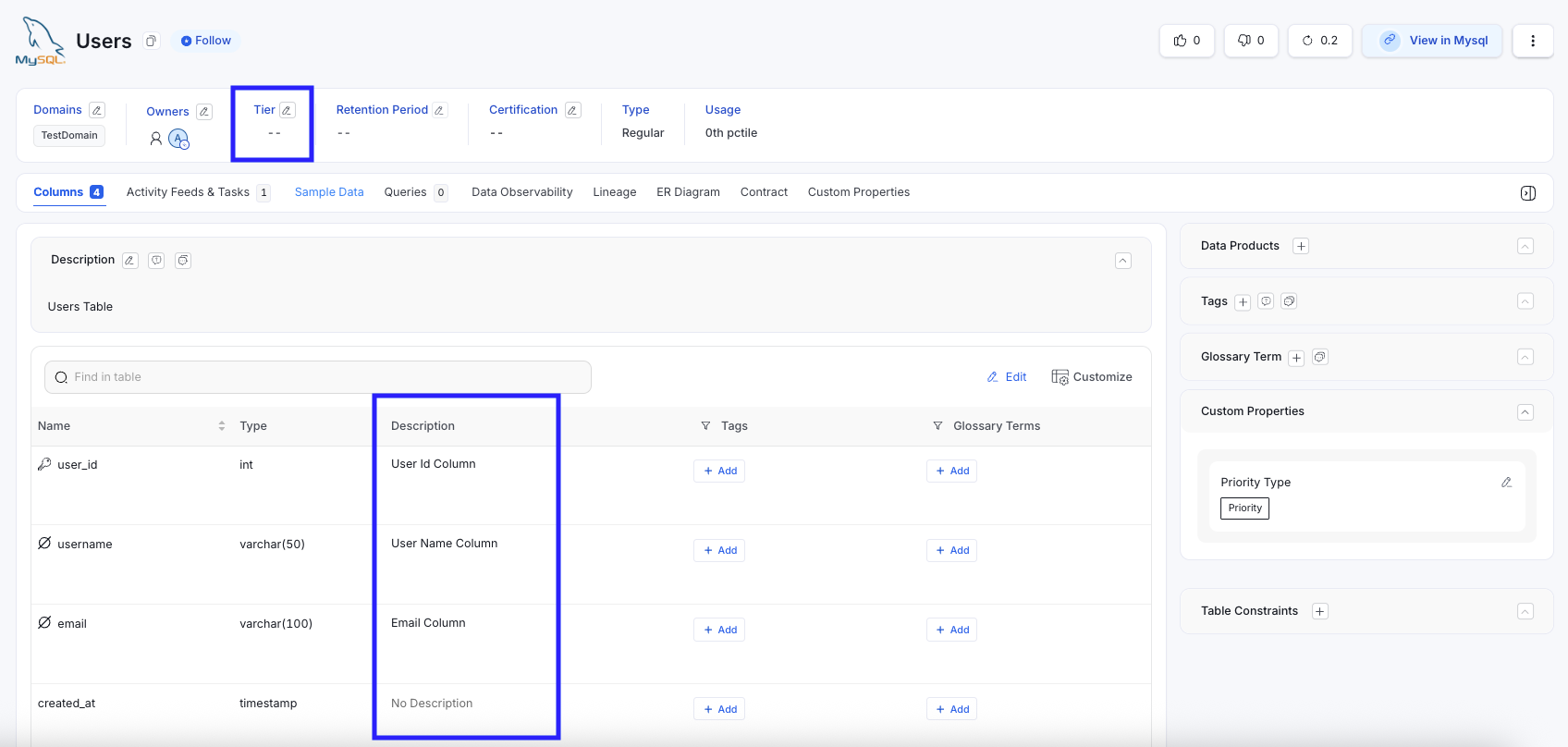
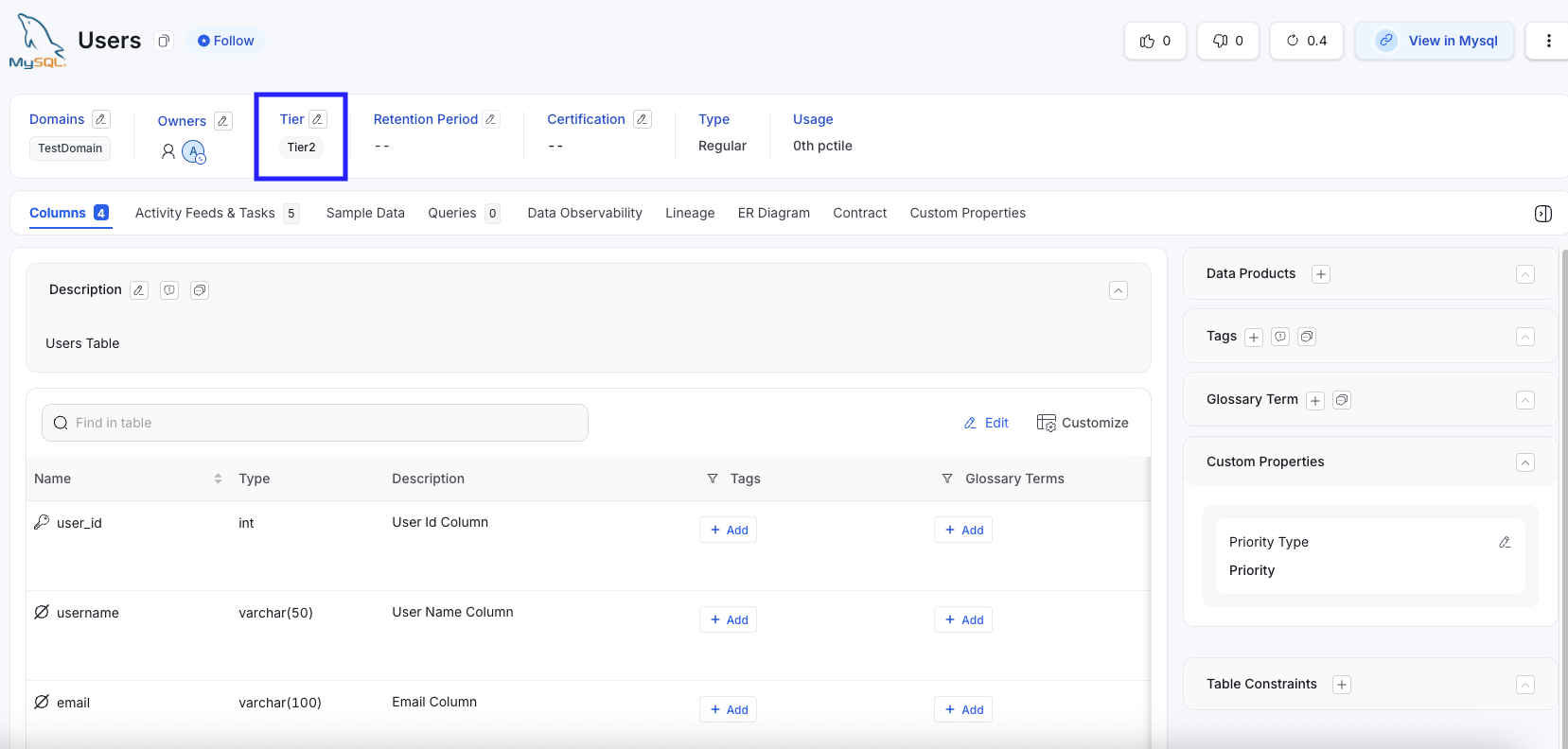
Users Table (Before) - 3/4 Columns have description
After Workflow Execution
After running the Table Documentation Tiering Workflow, each table is assigned a certification tier based on its calculated completeness.Categories Table → Tier 1
Comments Table → Tier 4
PostTags Table→ Tier 3
Users Table→ Tier 2
Why This Workflow Matters
- Improves Metadata Quality: Encourages teams to provide complete column descriptions.
- Enforces Governance Standards: Ensures consistent evaluation across all datasets.
- Enables Discoverability: Better-documented tables accelerate analyst productivity.
- Creates Accountability: Provides visibility into documentation gaps for each table.
- Automates Tier: Reduces manual effort and improves accuracy in governance processes.