Getting Started with Goose Desktop
Configure Collate’s MCP Server to interact with the Goose AI agent.Prerequisites
For this guide, you will need:- nvm and npx/node version 22
- Collate v1.8.0 or later- You can upgrade your version of Collate with this guide
- Goose Desktop
- Collate MCP Application and Personal Access Token
Adding your Collate MCP Server to Goose Desktop
This how-to guide uses Goose Desktop for macOS. Make sure that you already have an LLM Provider configured before prompting.- Navigate to Goose Desktop’s Settings, then under Extensions, select +Add custom extension.
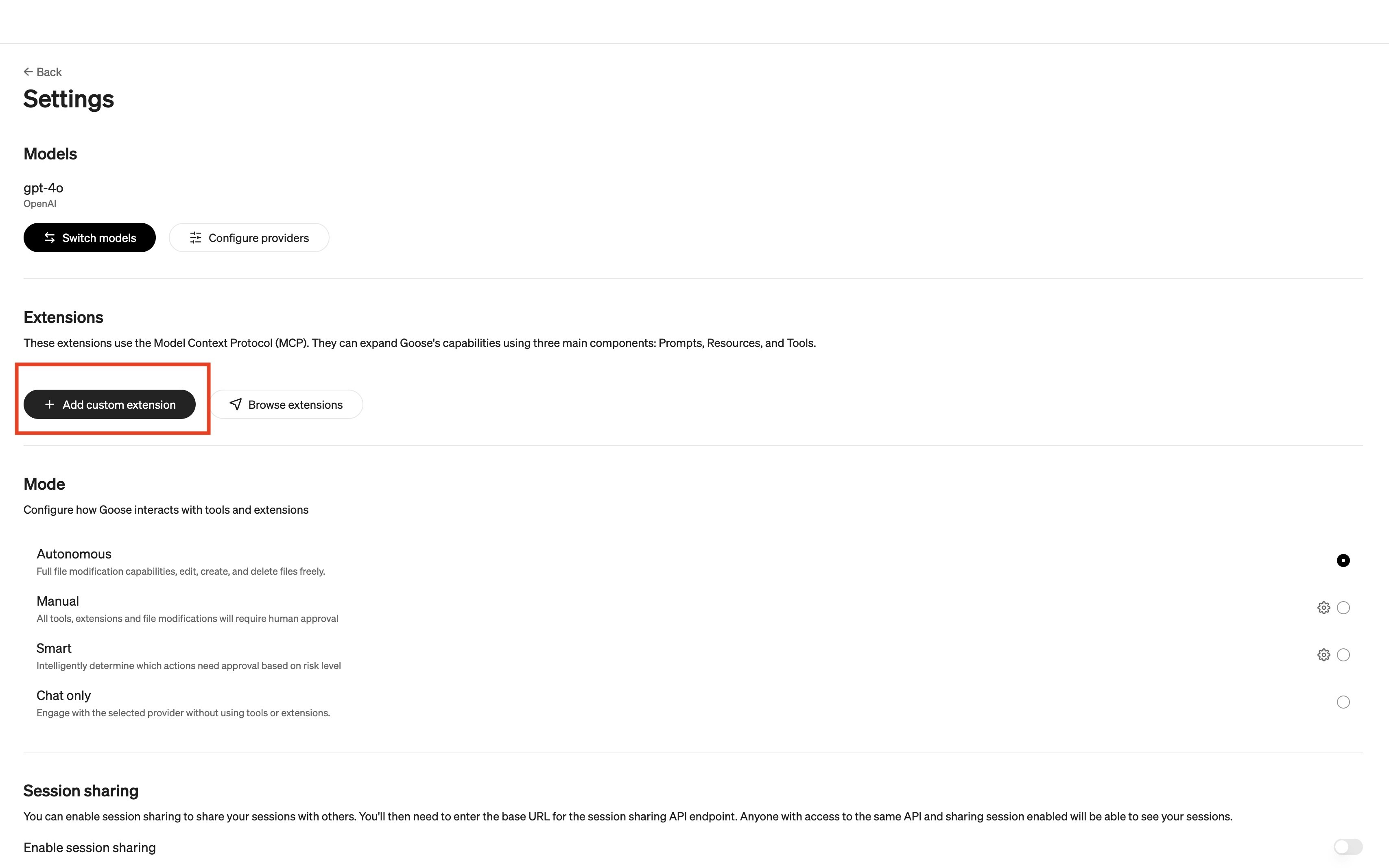
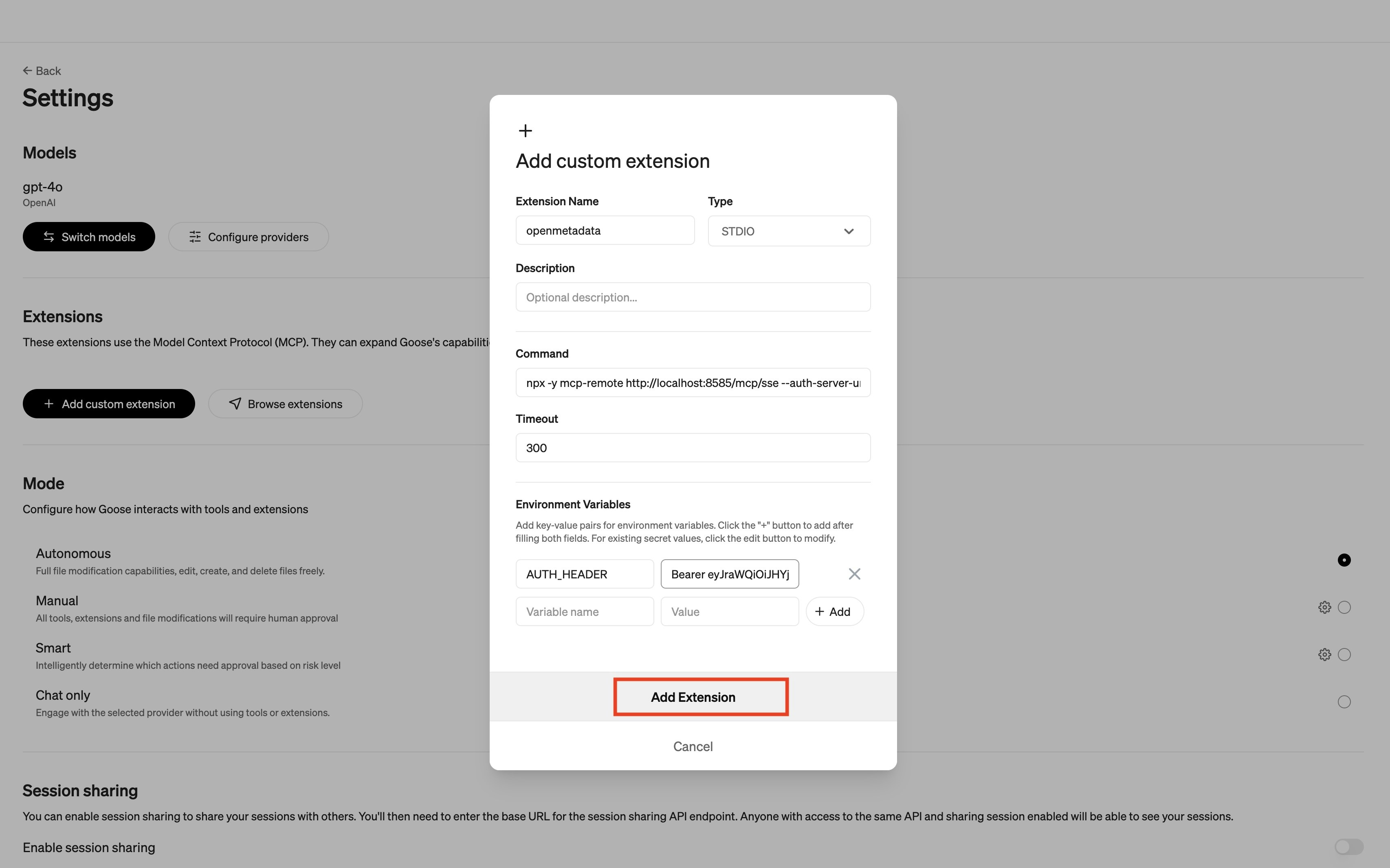
- The custom extension should have the following information:
- Extension Name
Collate - Command paste the following command:
- If you are running it locally, your command will look like this:
- If you are running it locally, your command will look like this:
- Add 1 Environment Variable
- Variable name is
AUTH_HEADER - Value is
Bearer <YOUR_Collate_PAT>
- Variable name is
- Extension Name
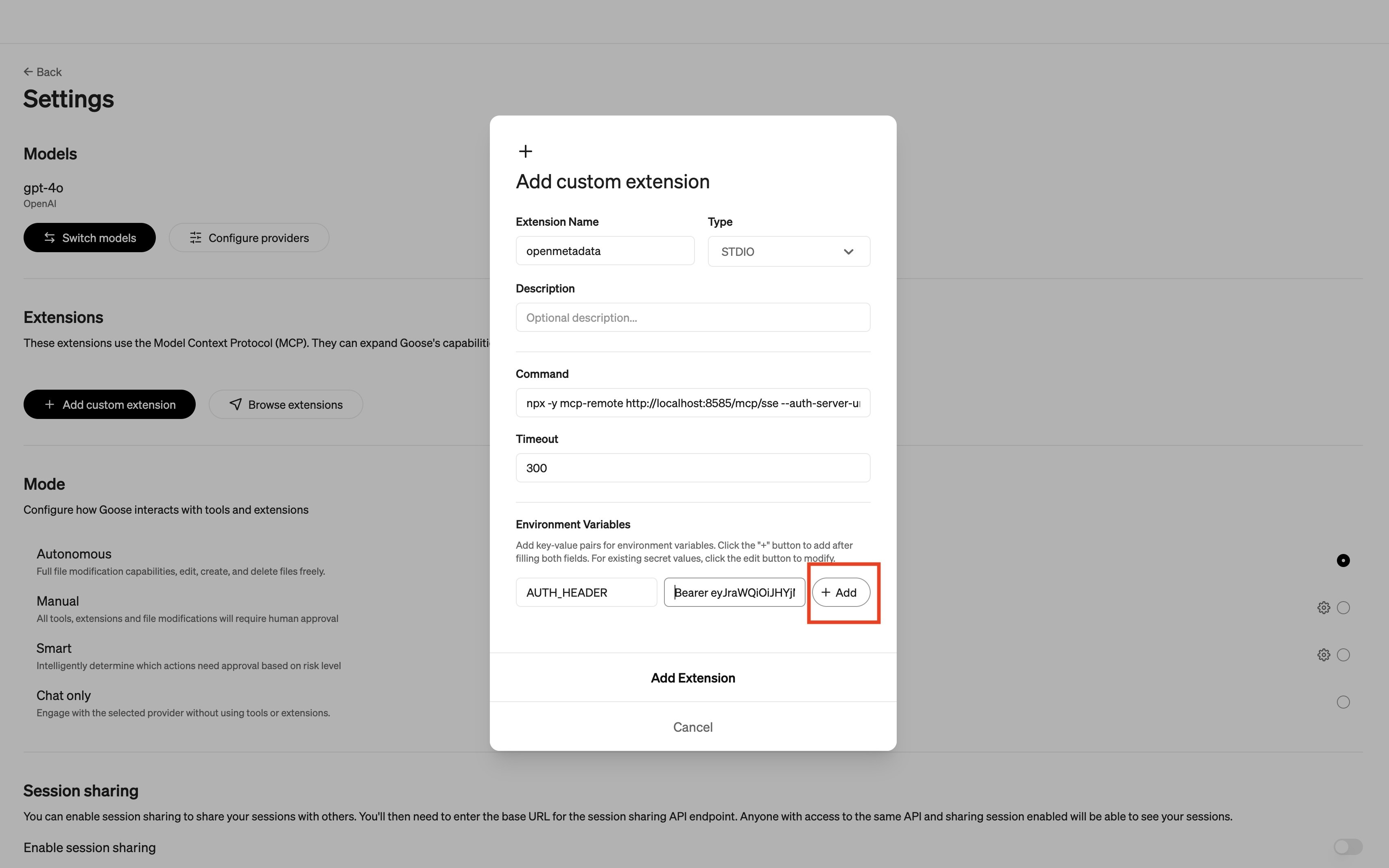
- Select +Add to store this Environment Variable
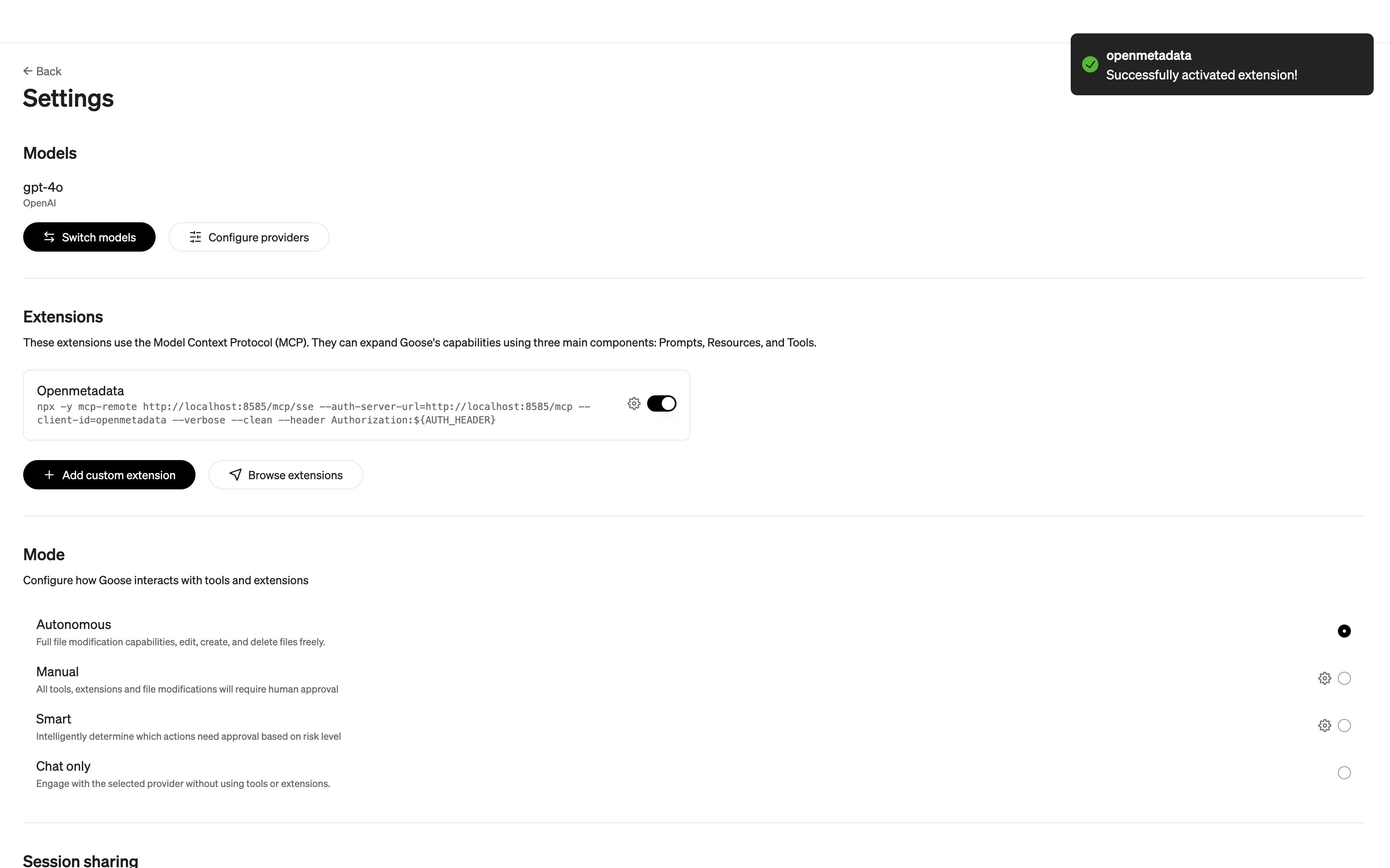
- Select Add Extension