
Steps to Set Up Anomaly Detection
1. Create a Test from the UI
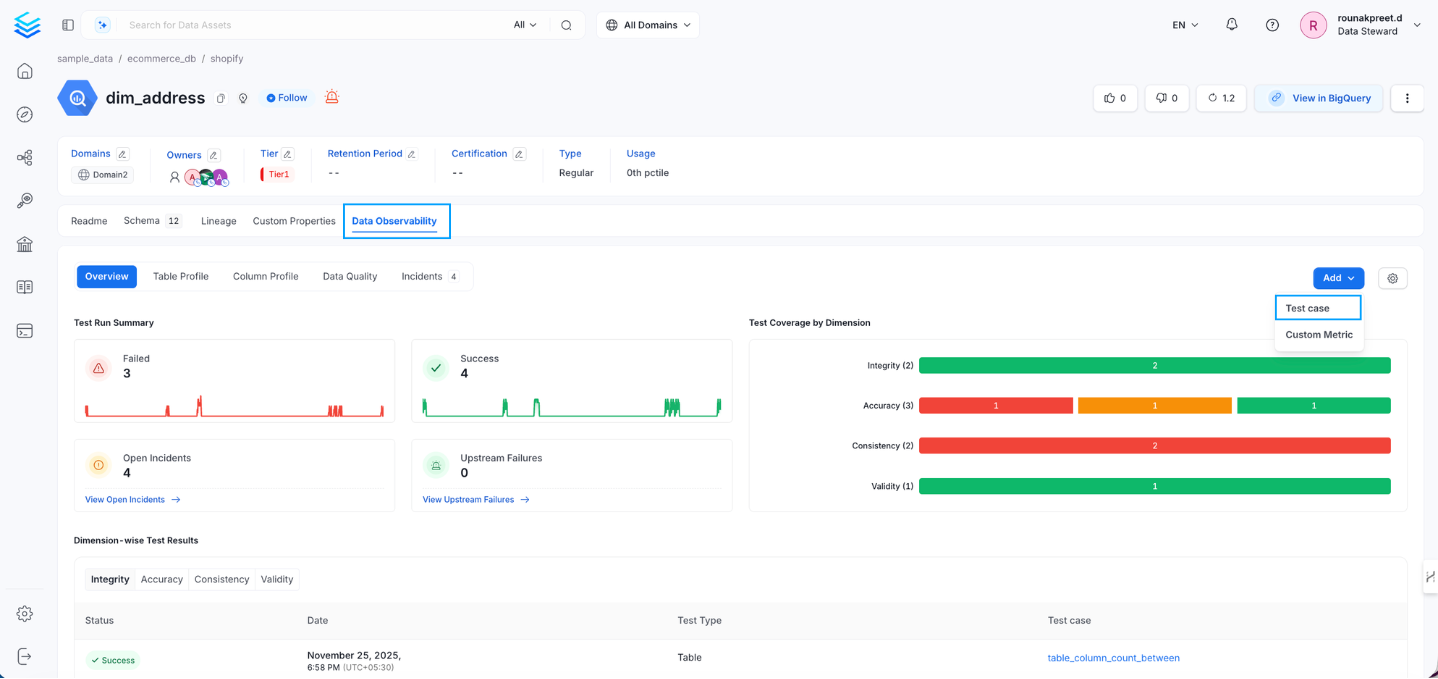
- First, select the dataset and navigate to the Tests section in the Collate UI.
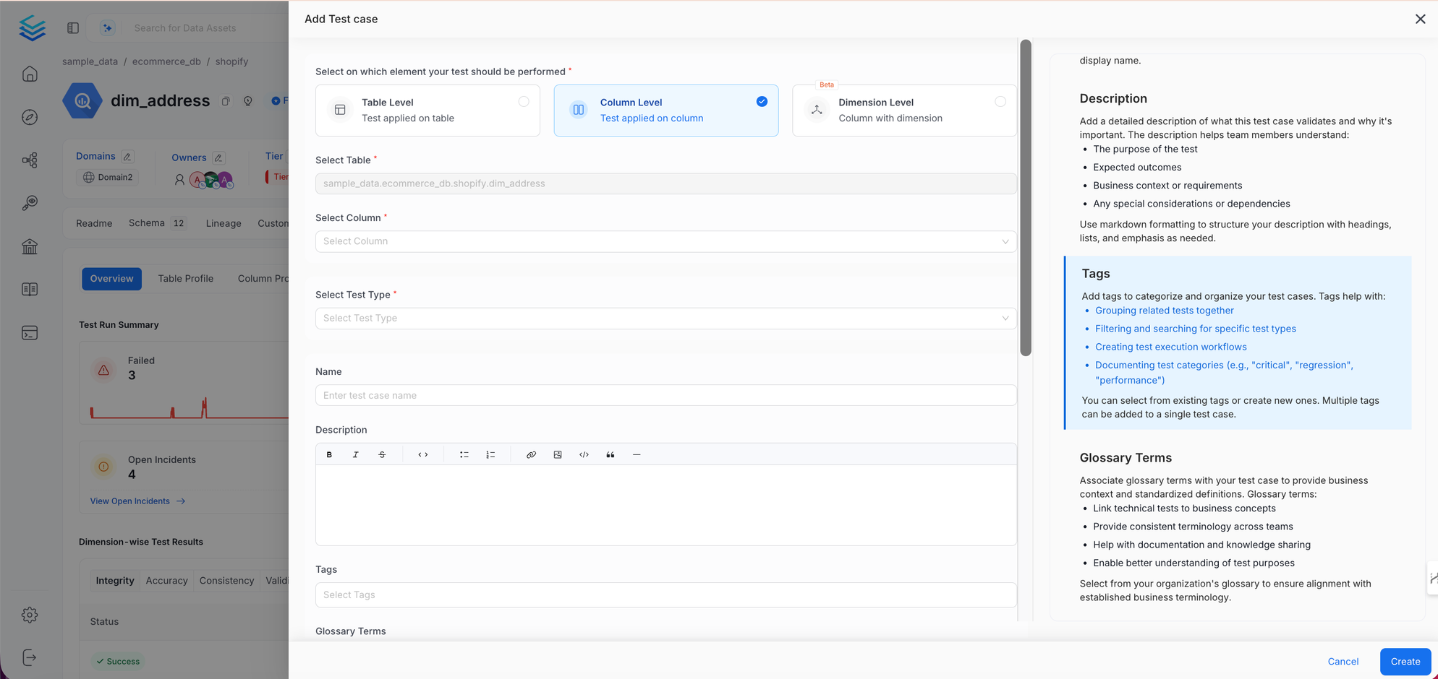
- Define your test parameters. You can either create a static test (e.g., “no null values” or “data should not exceed a certain range”) or configure dynamic assertions to let the system learn from the data.
2. Configure Manual Tests
- For more controlled monitoring, set up manual thresholds (e.g., sales should not exceed a maximum value of 100). This provides specific control over data validation criteria.
3. Enable Dynamic Assertions
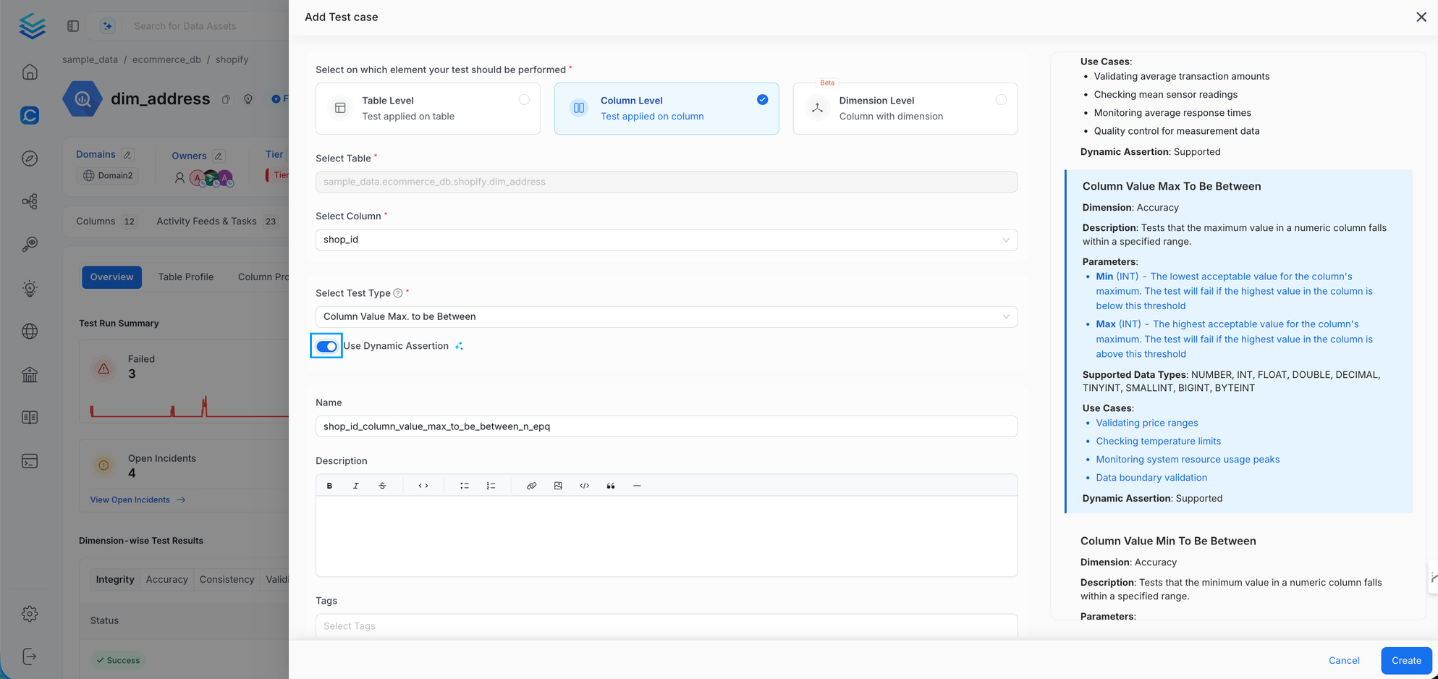
- For data that naturally fluctuates or evolves, enable dynamic assertions. Collate will start profiling your data regularly to learn its normal behavior.
- Over time (e.g., five weeks), the system will establish expected value ranges and detect any deviations from these patterns.
4. Monitor Incidents
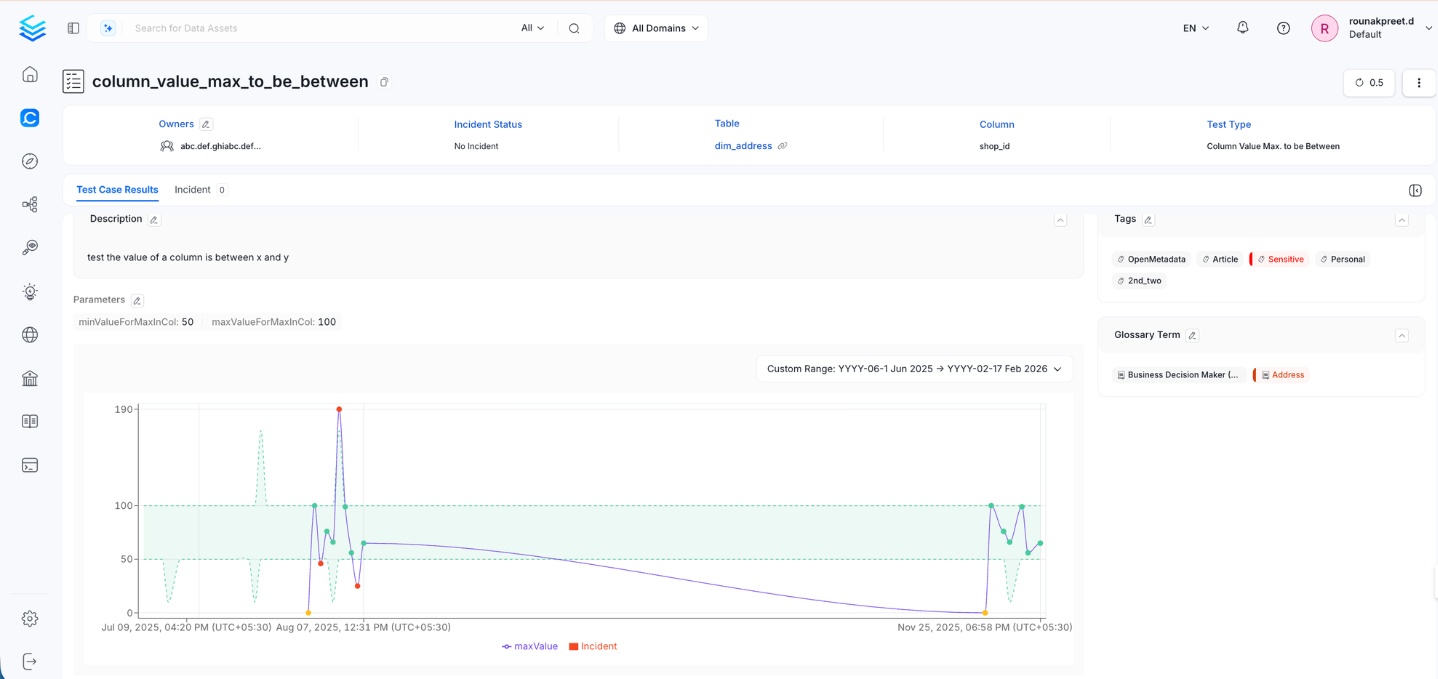
- After configuring tests, monitor for any incidents triggered by anomalies detected in the system.
- Investigate significant spikes, drops, or unusual behaviors in the data, which may indicate system errors, backend failures, or unexpected external factors.
Best Practices
- Use Static Assertions for Simple Rules: For basic data validation, such as preventing null values or enforcing a minimum threshold, static assertions are effective and straightforward to configure.
- Leverage Dynamic Assertions for Evolving Data: When dealing with datasets that naturally fluctuate (e.g., sales or user activity), dynamic assertions can save time and ensure incidents are only triggered when significant anomalies occur.
- Regularly Review Incidents: Stay on top of incidents generated by anomaly detection to promptly identify and address data quality issues.
- Combine Manual and Dynamic Methods: For datasets with well-defined boundaries and evolving characteristics, combining manual thresholds and dynamic assertions provides comprehensive anomaly detection coverage.