
Requirements
Dagster Versions
OpenMetadata is integrated with dagster up to version 1.0.13 and will continue to work for future dagster versions. The ingestion framework uses dagster graphql python client to connect to the dagster instance and perform the API callsMetadata Ingestion
Connection Details
1
Connection Details
- Host: Host of the dagster eg.
https://localhost:3000orhttps://127.0.0.1:3000orhttps://<yourorghere>.dagster.cloud/prod - Token : Need pass token if connecting to
dagster cloudinstance- Log in to your Dagster account.
- Click on the “Settings” link in the top navigation bar.
- Click on the “API Keys” tab.
- Click on the “Create a New API Key” button.
- Give your API key a name and click on the “Create API Key” button.
- Copy the generated API key to your clipboard and paste it in the field.
2
Test the Connection
Once the credentials have been added, click on Test Connection and Save the changes.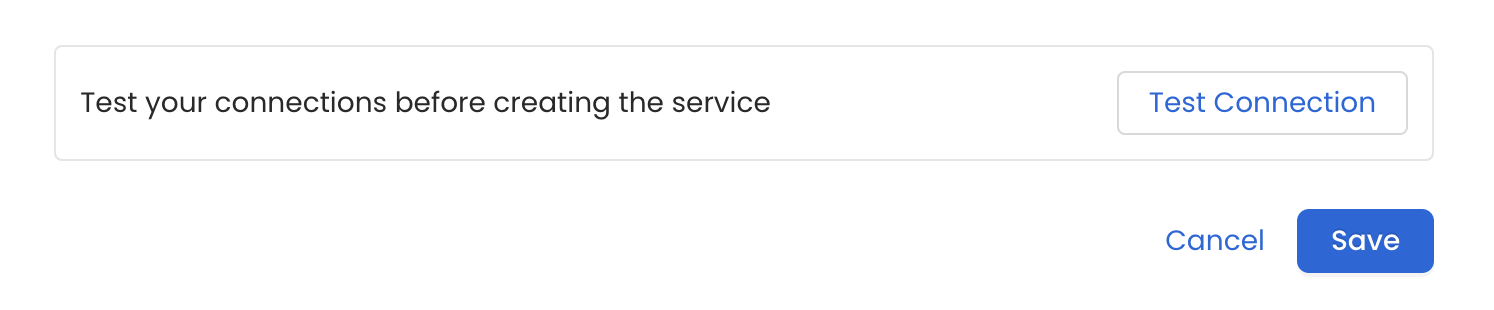
3
Configure Metadata Ingestion
In this step we will configure the metadata ingestion pipeline,
Please follow the instructions below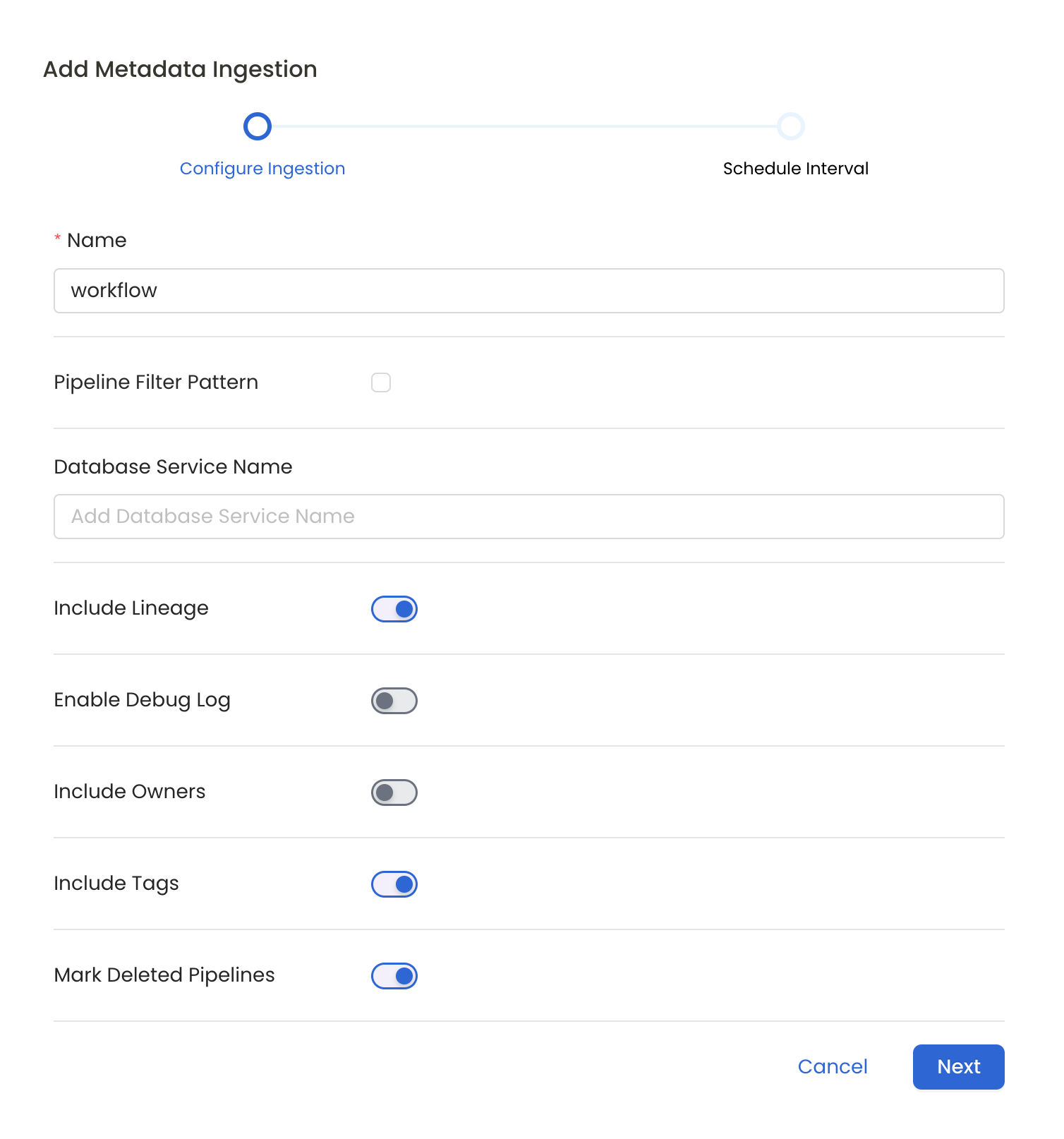
Metadata Ingestion Options
- Name: This field refers to the name of ingestion pipeline, you can customize the name or use the generated name.
- Pipeline Filter Pattern (Optional): Use to pipeline filter patterns to control whether or not to include pipeline as part of metadata ingestion.
- Include: Explicitly include pipeline by adding a list of comma-separated regular expressions to the Include field. OpenMetadata will include all pipeline with names matching one or more of the supplied regular expressions. All other schemas will be excluded.
- Exclude: Explicitly exclude pipeline by adding a list of comma-separated regular expressions to the Exclude field. OpenMetadata will exclude all pipeline with names matching one or more of the supplied regular expressions. All other schemas will be included.
- Include lineage (toggle): Set the Include lineage toggle to control whether to include lineage between pipelines and data sources as part of metadata ingestion.
- Enable Debug Log (toggle): Set the Enable Debug Log toggle to set the default log level to debug.
- Mark Deleted Pipelines (toggle): Set the Mark Deleted Pipelines toggle to flag pipelines as soft-deleted if they are not present anymore in the source system.
4
Schedule the Ingestion and Deploy
Scheduling can be set up at an hourly, daily, weekly, or manual cadence. The
timezone is in UTC. Select a Start Date to schedule for ingestion. It is
optional to add an End Date.Review your configuration settings. If they match what you intended,
click Deploy to create the service and schedule metadata ingestion.If something doesn’t look right, click the Back button to return to the
appropriate step and change the settings as needed.After configuring the workflow, you can click on Deploy to create the
pipeline.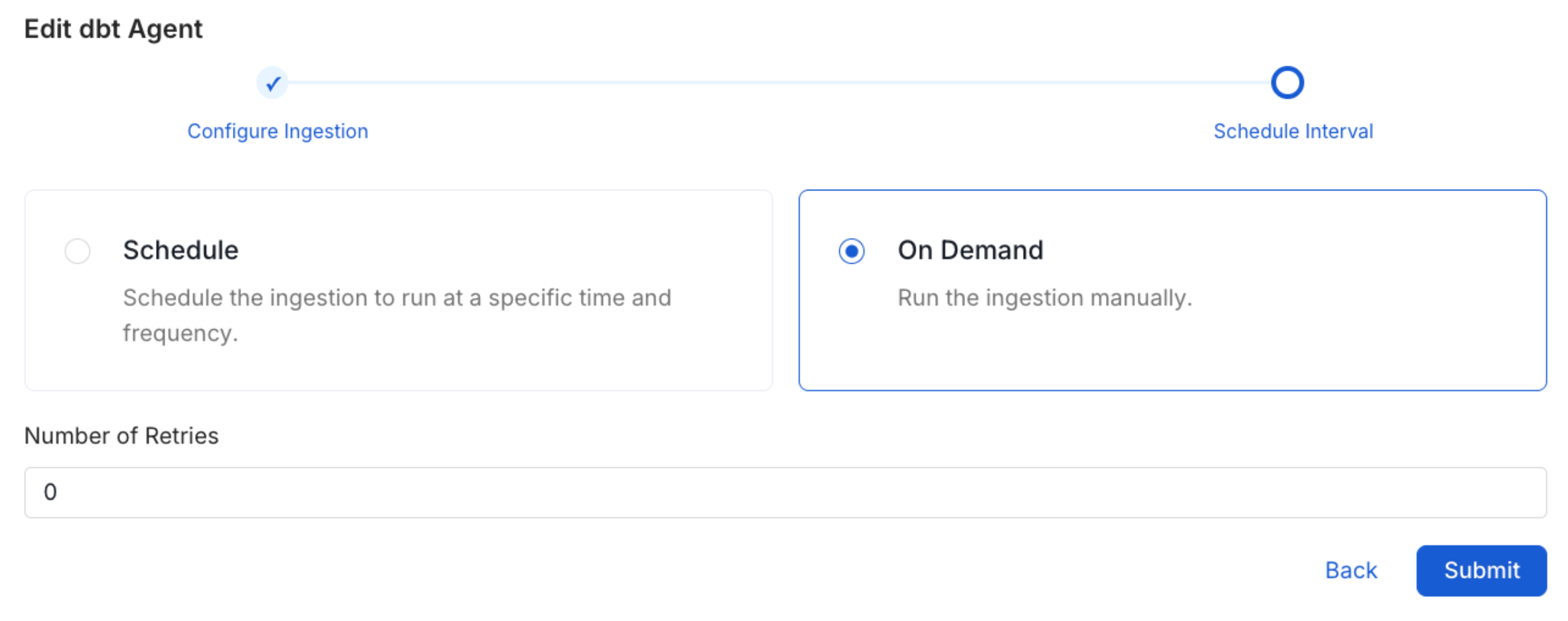
5
View the Ingestion Pipeline
Once the workflow has been successfully deployed, you can view the
Ingestion Pipeline running from the Service Page.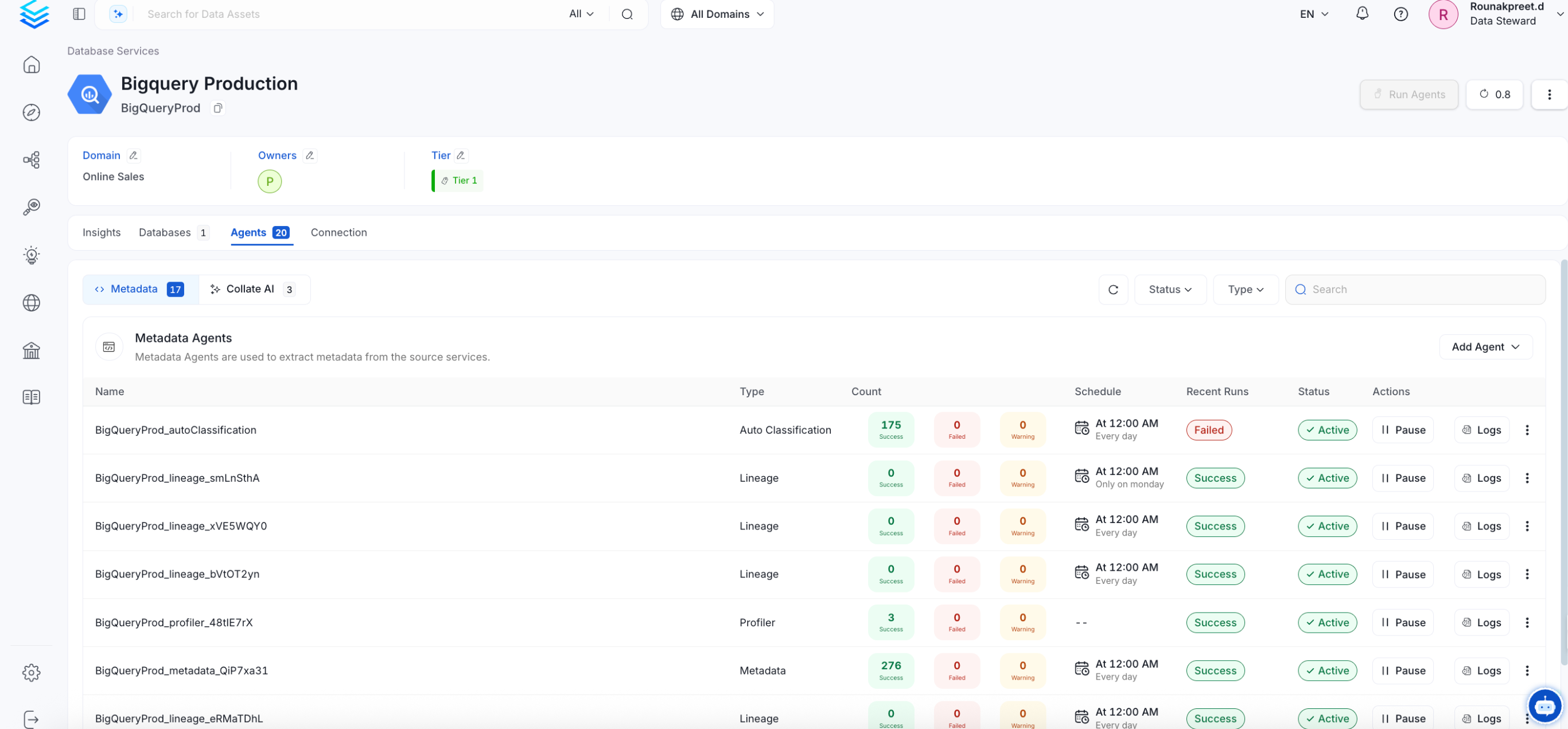
Troubleshooting
Dagster Troubleshooting
Learn more about how to troubleshoot common Dagster connector issues and resolve configuration or ingestion errors.