> ## Documentation Index
> Fetch the complete documentation index at: https://docs.getcollate.io/llms.txt
> Use this file to discover all available pages before exploring further.
# Redshift Connector | Collate AWS Data Warehouse | Hybrid Runner
> Connect Amazon Redshift to Collate easily with our comprehensive database connector guide. Setup instructions, configuration tips, and metadata extraction workflows.
export const MetadataIngestionUi = ({connector, selectServicePath, addNewServicePath, serviceConnectionPath}) => {
return <>
To ingest metadata from your sources, you need to create a service connection.
The service connects your source system with Collate. Once you create
a service, you can use it to configure your ingestion workflows.
To create a service connection and ingest your metadata, follow the steps below:
-
On the left navigation bar, click Settings.
-
On the next page, click Services, and then select the service.
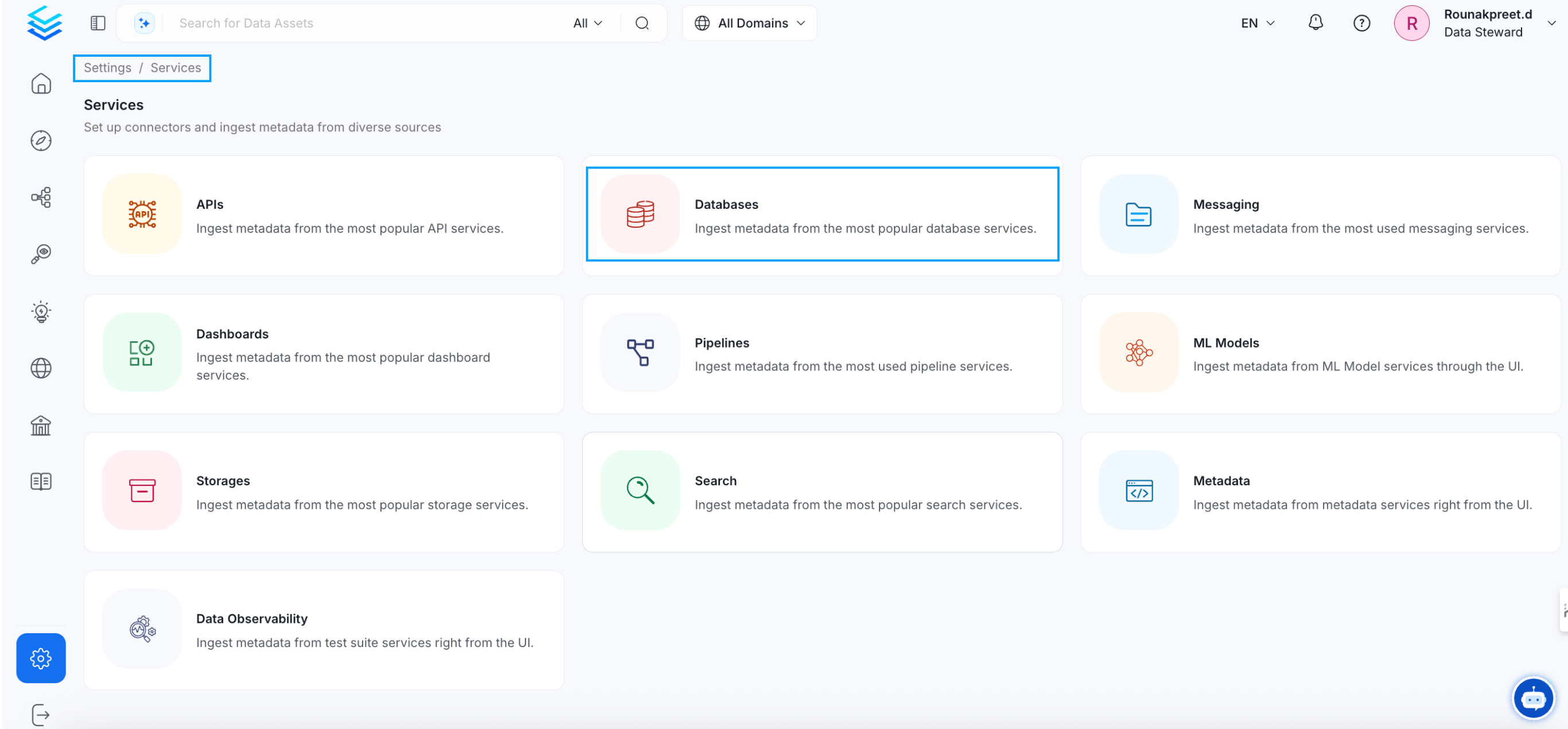
To add a new service connection, click Add New Service.
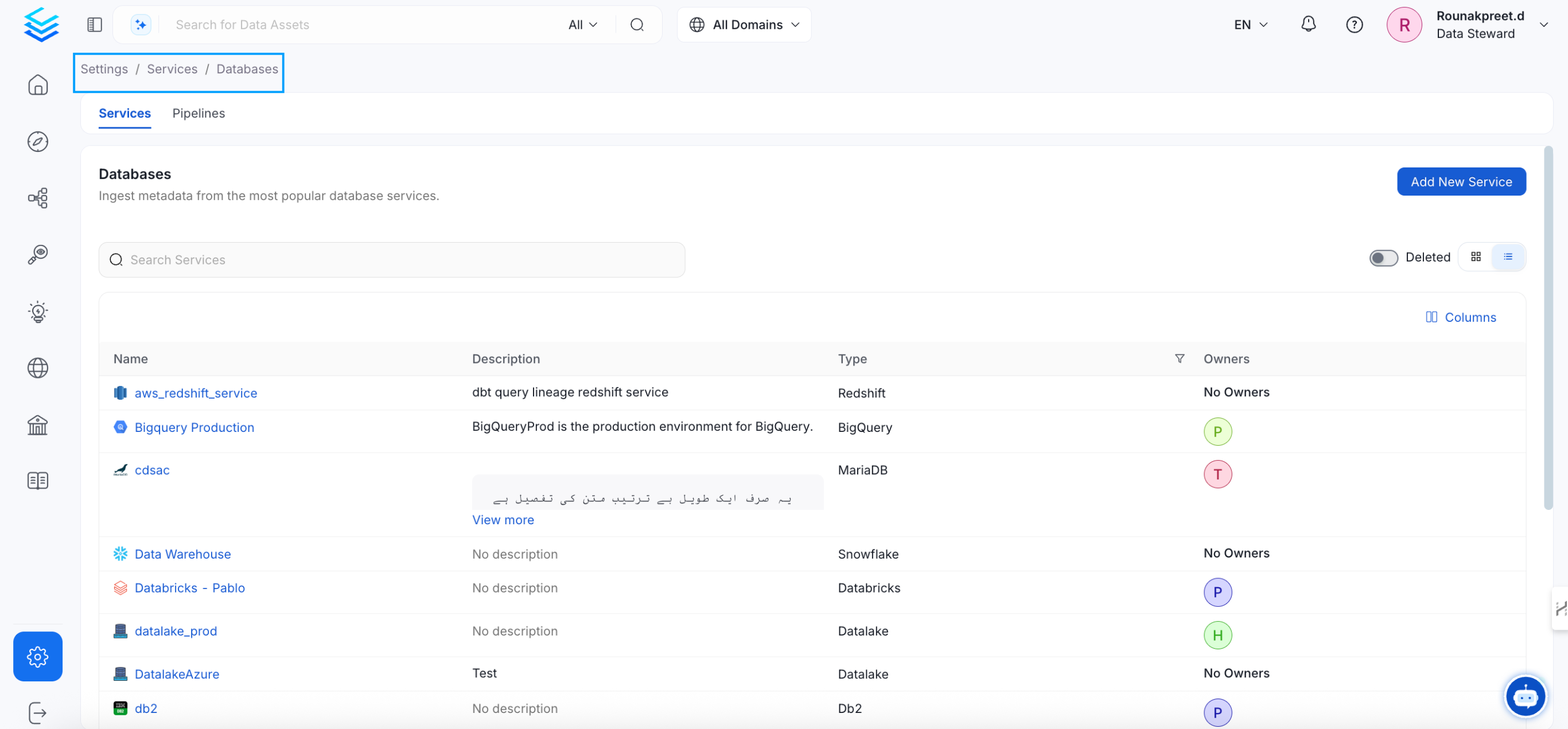 Select {connector} as the service type and click Next.
{selectServicePath &&
Select {connector} as the service type and click Next.
{selectServicePath &&  }
Enter a unique, descriptive Service Name and Description.
}
Enter a unique, descriptive Service Name and Description.
- Service Name: Collate identifies services by their service name. Enter a name that distinguishes this deployment from other services, including other {connector} services you are ingesting metadata from.
The service name cannot be changed after it is set.
{addNewServicePath &&  }
Set up the connection settings required for {connector}.
}
Set up the connection settings required for {connector}.
Configure the following connection options to set up the service and start ingesting metadata from your sources. The right-hand panel displays help documentation for the selected connection type in the product UI
{serviceConnectionPath &&  }
;
};
export const ConnectorDetailsHeader = ({name, icon, stage, availableFeatures, unavailableFeatures = [], availableFeaturesCollate = []}) => {
const showSubHeading = availableFeatures?.length > 0 || unavailableFeatures?.length > 0 || availableFeaturesCollate?.length > 0;
const totalAvailableFeatures = [...availableFeatures || [], ...availableFeaturesCollate || []];
return
}
;
};
export const ConnectorDetailsHeader = ({name, icon, stage, availableFeatures, unavailableFeatures = [], availableFeaturesCollate = []}) => {
const showSubHeading = availableFeatures?.length > 0 || unavailableFeatures?.length > 0 || availableFeaturesCollate?.length > 0;
const totalAvailableFeatures = [...availableFeatures || [], ...availableFeaturesCollate || []];
return
{icon &&
}
{name}
{stage}
{showSubHeading &&
Feature List
{totalAvailableFeatures.map(feature =>
✓ {feature}
)}
{unavailableFeatures.map(feature =>
✕ {feature}
)}
}
;
};
In this section, we provide guides and references to use the Redshift connector.
Configure and schedule Redshift metadata and profiler workflows from the OpenMetadata UI:
* [Requirements](#requirements)
* [Metadata Ingestion](#metadata-ingestion)
* [Incremental Extraction](/how-to-guides/guide-for-data-users/ingestion/workflows/metadata/incremental-extraction/redshift)
* [Query Usage](/how-to-guides/guide-for-data-users/ingestion/workflows/usage)
* [Data Profiler](/how-to-guides/data-quality-observability/profiler/profiler-workflow)
* [Data Quality](/how-to-guides/data-quality-observability/quality)
* [Lineage](/how-to-guides/guide-for-data-users/ingestion/lineage)
* [dbt Integration](/connectors/database/dbt)
* [Enable Security](#securing-redshift-connection-with-ssl-in-openmetadata)
* [Troubleshooting](/connectors/database/redshift/troubleshooting)
* [Reverse Metadata](#reverse-metadata)
## Requirements
### Metadata
Redshift user must grant `SELECT` privilege on table [SVV\_TABLE\_INFO](https://docs.aws.amazon.com/redshift/latest/dg/r_SVV_TABLE_INFO.html) to fetch the metadata of tables and views. For more information visit [here](https://docs.aws.amazon.com/redshift/latest/dg/c_visibility-of-data.html).
```sql theme={null}
-- Create a new user
-- More details https://docs.aws.amazon.com/redshift/latest/dg/r_CREATE_USER.html
CREATE USER test_user with PASSWORD 'password';
-- Grant SELECT on table
GRANT SELECT ON TABLE svv_table_info to test_user;
```
The Redshift connector supports both Amazon Redshift Provisioned (cluster) and Amazon Redshift Serverless starting from release 1.11.5. The connector automatically detects the deployment type during ingestion and uses the appropriate system views for query and lineage extraction. No additional configuration changes are required.
Ensure that the ingestion user has **USAGE** privileges on the schema containing the views. If additional access is needed, run the following command:
```sql theme={null}
GRANT USAGE ON SCHEMA "" TO ;
```
### Profiler & Data Quality
Executing the profiler workflow or data quality tests, will require the user to have `SELECT` permission on the tables/schemas where the profiler/tests will be executed. More information on the profiler workflow setup can be found [here](/how-to-guides/data-quality-observability/profiler/profiler-workflow) and data quality tests [here](/how-to-guides/data-quality-observability/quality).
### Usage & Lineage
For the usage and lineage workflow, the user will need `SELECT` privilege on `STL_QUERY` table. You can find more information on the usage workflow [here](/how-to-guides/guide-for-data-users/ingestion/workflows/usage) and the lineage workflow [here](/how-to-guides/guide-for-data-users/ingestion/workflows/lineage).
## Metadata Ingestion
It is recommended to exclude the schema "information\_schema" from the metadata ingestion as it contains system tables and views.
## Connection Details
When using a **Hybrid Ingestion Runner**, any sensitive credential fields—such as passwords, API keys, or private keys—must reference secrets using the following format:
```
password: secret:/my/database/password
```
This applies **only to fields marked as secrets** in the connection form (these typically mask input and show a visibility toggle icon).
For a complete guide on managing secrets in hybrid setups, see the [Hybrid Ingestion Runner Secret Management Guide](https://docs.getcollate.io/getting-started/day-1/hybrid-saas/hybrid-ingestion-runner#3.-manage-secrets-securely).
* **Username**: Specify the User to connect to Redshift. It should have enough privileges to read all the metadata.
* **Password**: Password to connect to Redshift.
* **Database**: The database of the data source is an optional parameter, if you would like to restrict the metadata reading to a single database. If left blank, OpenMetadata ingestion attempts to scan all the databases.
**SSL Configuration**
In order to integrate SSL in the Metadata Ingestion Config, the user will have to add the SSL config under connectionArguments which is placed in the source.
**SSL Modes**
There are a couple of types of SSL modes that Redshift supports which can be added to ConnectionArguments, they are as follows:
* **disable**: SSL is disabled and the connection is not encrypted.
* **allow**: SSL is used if the server requires it.
* **prefer**: SSL is used if the server supports it. Amazon Redshift supports SSL, so SSL is used when you set sslmode to prefer.
* **require**: SSL is required.
* **verify-ca**: SSL must be used and the server certificate must be verified.
* **verify-full**: SSL must be used. The server certificate must be verified and the server hostname must match the hostname attribute on the certificate.
For more information, you can visit [Redshift SSL documentation](https://docs.aws.amazon.com/redshift/latest/mgmt/connecting-ssl-support.html)
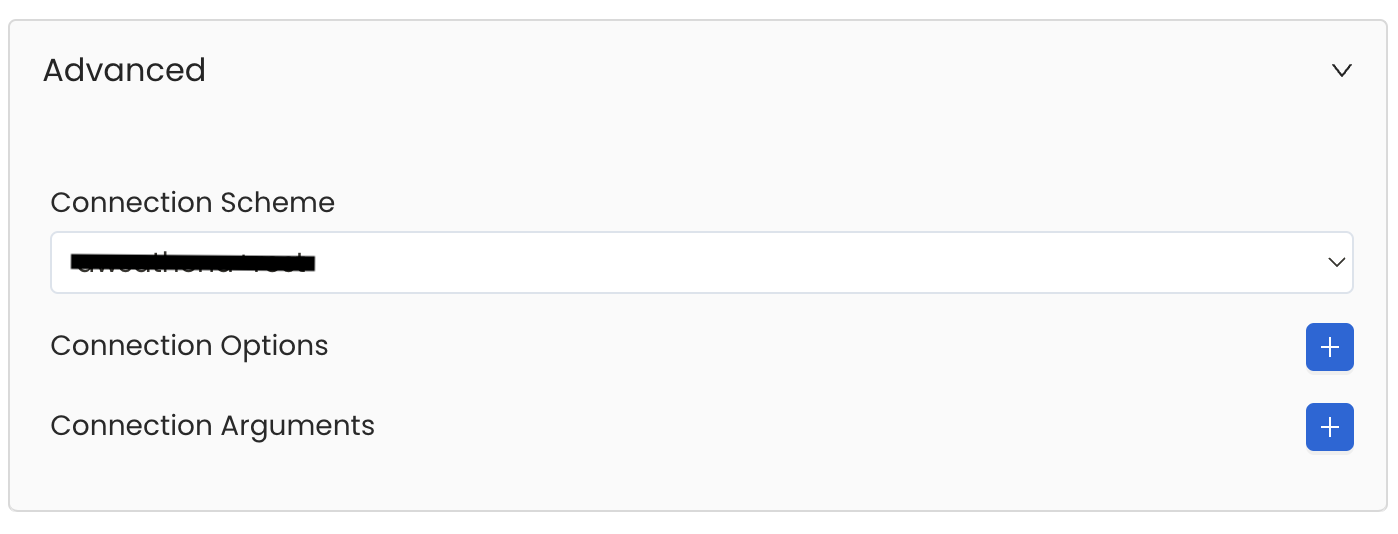
Database Services have an Advanced Configuration section, where you can pass extra arguments to the connector
and, if needed, change the connection Scheme.
This would only be required to handle advanced connectivity scenarios or customizations.
* **Connection Options (Optional)**: Enter the details for any additional connection options that can be sent to database during the connection. These details must be added as Key-Value pairs.
* **Connection Arguments (Optional)**: Enter the details for any additional connection arguments such as security or protocol configs that can be sent during the connection. These details must be added as Key-Value pairs.
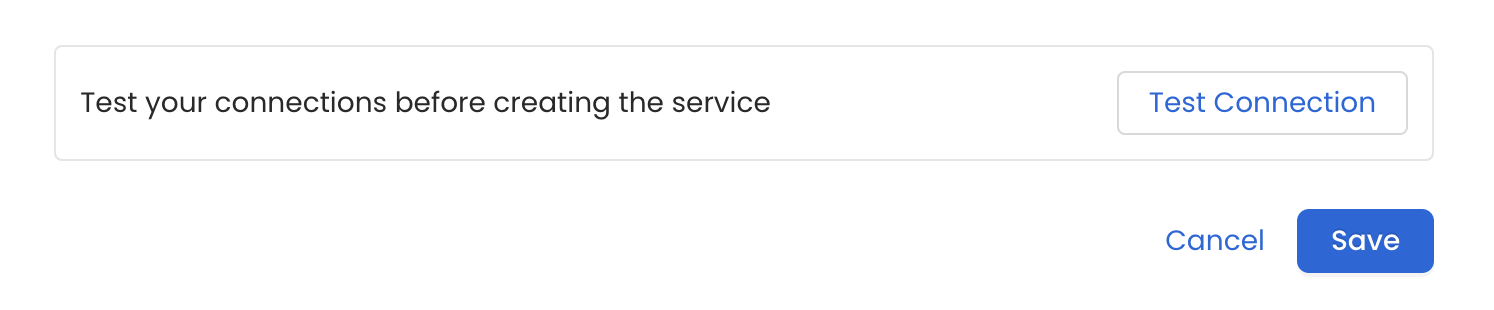
 Once the credentials have been added, click on *Test Connection* and *Save* the changes.
 In this step we will configure the metadata ingestion pipeline,
Please follow the instructions below
In this step we will configure the metadata ingestion pipeline,
Please follow the instructions below
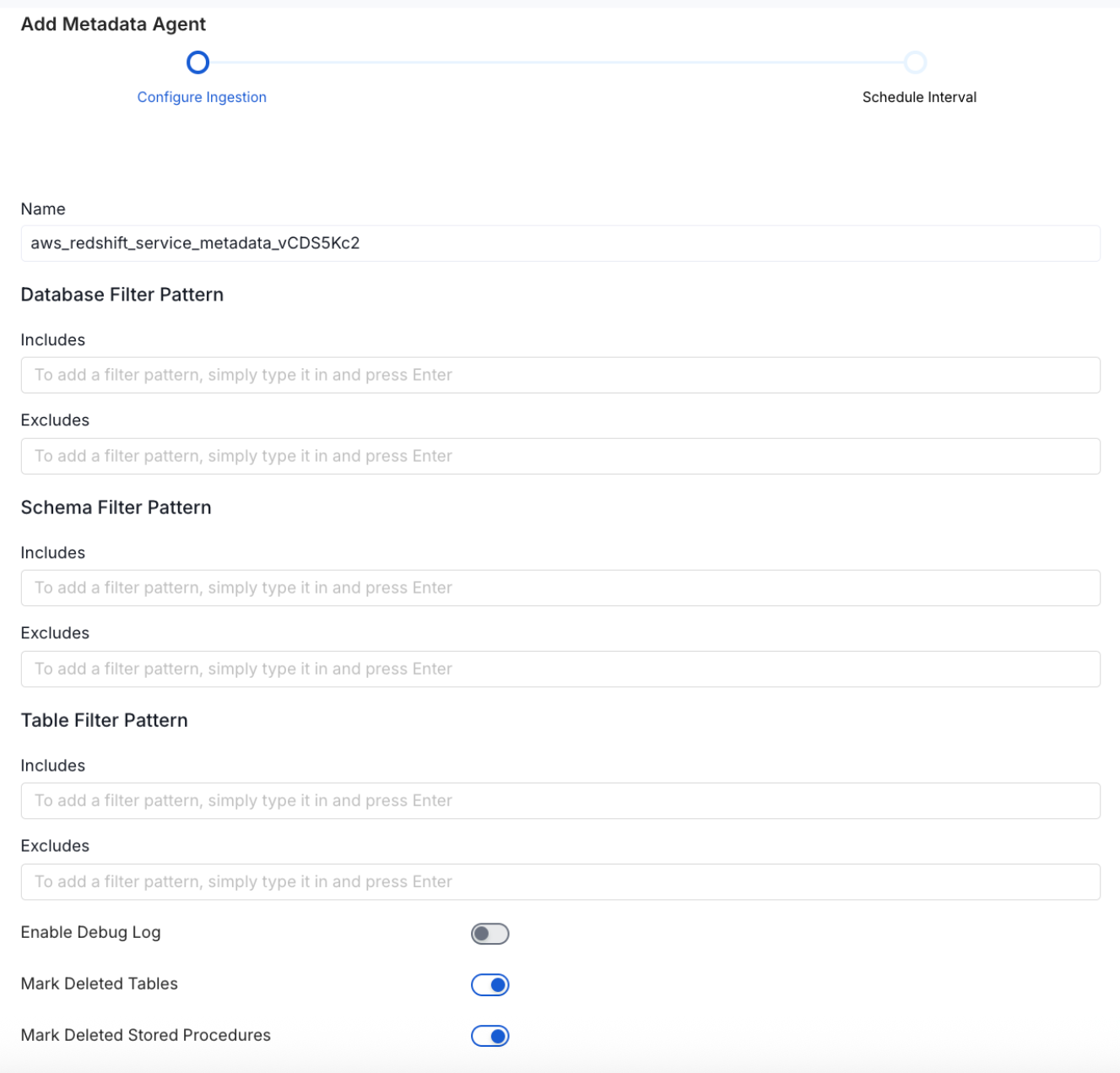
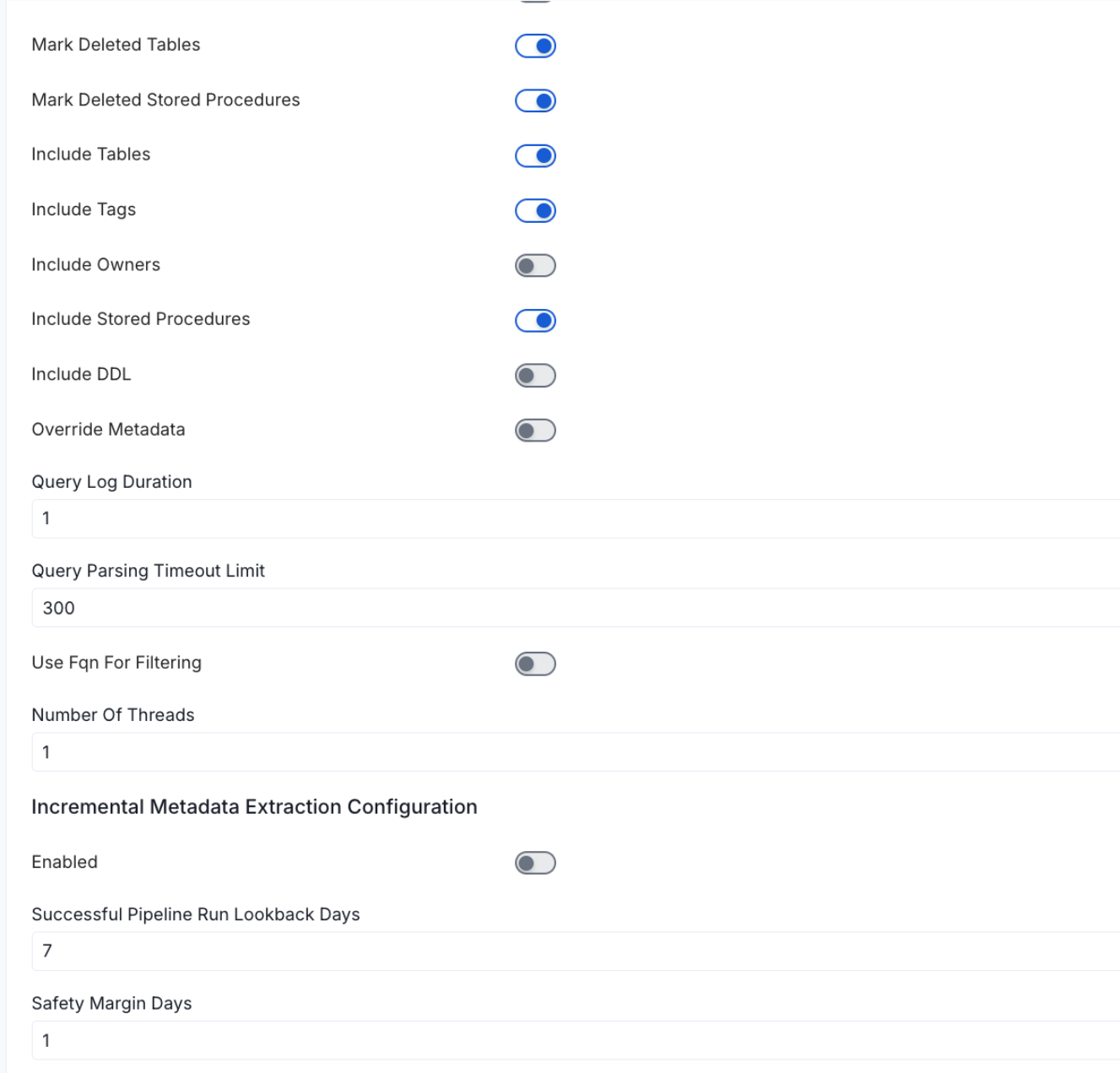 #### Metadata Ingestion Options
If the owner's name is openmetadata, you need to enter `openmetadata@domain.com` in the name section of add team/user form, click [here](/connectors/database/dbt/ingest-dbt-owner#following-steps-shows-adding-a-user-to-openmetadata) for more info.
* **Name**: This field refers to the name of ingestion pipeline, you can customize the name or use the generated name.
* **Database Filter Pattern (Optional)**: Use to database filter patterns to control whether or not to include database as part of metadata ingestion.
* **Include**: Explicitly include databases by adding a list of comma-separated regular expressions to the Include field. OpenMetadata will include all databases with names matching one or more of the supplied regular expressions. All other databases will be excluded.
* **Exclude**: Explicitly exclude databases by adding a list of comma-separated regular expressions to the Exclude field. OpenMetadata will exclude all databases with names matching one or more of the supplied regular expressions. All other databases will be included.
* **Schema Filter Pattern (Optional)**: Use to schema filter patterns to control whether to include schemas as part of metadata ingestion.
* **Include**: Explicitly include schemas by adding a list of comma-separated regular expressions to the Include field. OpenMetadata will include all schemas with names matching one or more of the supplied regular expressions. All other schemas will be excluded.
* **Exclude**: Explicitly exclude schemas by adding a list of comma-separated regular expressions to the Exclude field. OpenMetadata will exclude all schemas with names matching one or more of the supplied regular expressions. All other schemas will be included.
* **Table Filter Pattern (Optional)**: Use to table filter patterns to control whether to include tables as part of metadata ingestion.
* **Include**: Explicitly include tables by adding a list of comma-separated regular expressions to the Include field. OpenMetadata will include all tables with names matching one or more of the supplied regular expressions. All other tables will be excluded.
* **Exclude**: Explicitly exclude tables by adding a list of comma-separated regular expressions to the Exclude field. OpenMetadata will exclude all tables with names matching one or more of the supplied regular expressions. All other tables will be included.
* **Enable Debug Log (toggle)**: Set the Enable Debug Log toggle to set the default log level to debug.
* **Mark Deleted Tables (toggle)**: Set the Mark Deleted Tables toggle to flag tables as soft-deleted if they are not present anymore in the source system.
* **Mark Deleted Tables from Filter Only (toggle)**: Set the Mark Deleted Tables from Filter Only toggle to flag tables as soft-deleted if they are not present anymore within the filtered schema or database only. This flag is useful when you have more than one ingestion pipelines. For example if you have a schema
* **includeTables (toggle)**: Optional configuration to turn off fetching metadata for tables.
* **includeViews (toggle)**: Set the Include views toggle to control whether to include views as part of metadata ingestion.
* **includeTags (toggle)**: Set the 'Include Tags' toggle to control whether to include tags as part of metadata ingestion.
* **includeOwners (toggle)**: Set the 'Include Owners' toggle to control whether to include owners to the ingested entity if the owner email matches with a user stored in the OM server as part of metadata ingestion. If the ingested entity already exists and has an owner, the owner will not be overwritten.
* **includeStoredProcedures (toggle)**: Optional configuration to toggle the Stored Procedures ingestion.
* **includeDDL (toggle)**: Optional configuration to toggle the DDL Statements ingestion.
* **queryLogDuration (Optional)**: Configuration to tune how far we want to look back in query logs to process Stored Procedures results.
* **queryParsingTimeoutLimit (Optional)**: Configuration to set the timeout for parsing the query in seconds.
* **useFqnForFiltering (toggle)**: Regex will be applied on fully qualified name (e.g service\_name.db\_name.schema\_name.table\_name) instead of raw name (e.g. table\_name).
* **Incremental (Beta)**: Use Incremental Metadata Extraction after the first execution. This is done by getting the changed tables instead of all of them. **Only Available for BigQuery, Redshift and Snowflake**
* **Enabled**: If `True`, enables Metadata Extraction to be Incremental.
* **lookback Days**: Number of days to search back for a successful pipeline run. The timestamp of the last found successful pipeline run will be used as a base to search for updated entities.
* **Safety Margin Days**: Number of days to add to the last successful pipeline run timestamp to search for updated entities.
* **Threads (Beta)**: Use a Multithread approach for Metadata Extraction. You can define here the number of threads you would like to run concurrently.
Note that the right-hand side panel in the Collate UI will also share useful documentation when configuring the ingestion.
Scheduling can be set up at an hourly, daily, weekly, or manual cadence. The
timezone is in UTC. Select a Start Date to schedule for ingestion. It is
optional to add an End Date.
Review your configuration settings. If they match what you intended,
click Deploy to create the service and schedule metadata ingestion.
If something doesn't look right, click the Back button to return to the
appropriate step and change the settings as needed.
After configuring the workflow, you can click on Deploy to create the
pipeline.
#### Metadata Ingestion Options
If the owner's name is openmetadata, you need to enter `openmetadata@domain.com` in the name section of add team/user form, click [here](/connectors/database/dbt/ingest-dbt-owner#following-steps-shows-adding-a-user-to-openmetadata) for more info.
* **Name**: This field refers to the name of ingestion pipeline, you can customize the name or use the generated name.
* **Database Filter Pattern (Optional)**: Use to database filter patterns to control whether or not to include database as part of metadata ingestion.
* **Include**: Explicitly include databases by adding a list of comma-separated regular expressions to the Include field. OpenMetadata will include all databases with names matching one or more of the supplied regular expressions. All other databases will be excluded.
* **Exclude**: Explicitly exclude databases by adding a list of comma-separated regular expressions to the Exclude field. OpenMetadata will exclude all databases with names matching one or more of the supplied regular expressions. All other databases will be included.
* **Schema Filter Pattern (Optional)**: Use to schema filter patterns to control whether to include schemas as part of metadata ingestion.
* **Include**: Explicitly include schemas by adding a list of comma-separated regular expressions to the Include field. OpenMetadata will include all schemas with names matching one or more of the supplied regular expressions. All other schemas will be excluded.
* **Exclude**: Explicitly exclude schemas by adding a list of comma-separated regular expressions to the Exclude field. OpenMetadata will exclude all schemas with names matching one or more of the supplied regular expressions. All other schemas will be included.
* **Table Filter Pattern (Optional)**: Use to table filter patterns to control whether to include tables as part of metadata ingestion.
* **Include**: Explicitly include tables by adding a list of comma-separated regular expressions to the Include field. OpenMetadata will include all tables with names matching one or more of the supplied regular expressions. All other tables will be excluded.
* **Exclude**: Explicitly exclude tables by adding a list of comma-separated regular expressions to the Exclude field. OpenMetadata will exclude all tables with names matching one or more of the supplied regular expressions. All other tables will be included.
* **Enable Debug Log (toggle)**: Set the Enable Debug Log toggle to set the default log level to debug.
* **Mark Deleted Tables (toggle)**: Set the Mark Deleted Tables toggle to flag tables as soft-deleted if they are not present anymore in the source system.
* **Mark Deleted Tables from Filter Only (toggle)**: Set the Mark Deleted Tables from Filter Only toggle to flag tables as soft-deleted if they are not present anymore within the filtered schema or database only. This flag is useful when you have more than one ingestion pipelines. For example if you have a schema
* **includeTables (toggle)**: Optional configuration to turn off fetching metadata for tables.
* **includeViews (toggle)**: Set the Include views toggle to control whether to include views as part of metadata ingestion.
* **includeTags (toggle)**: Set the 'Include Tags' toggle to control whether to include tags as part of metadata ingestion.
* **includeOwners (toggle)**: Set the 'Include Owners' toggle to control whether to include owners to the ingested entity if the owner email matches with a user stored in the OM server as part of metadata ingestion. If the ingested entity already exists and has an owner, the owner will not be overwritten.
* **includeStoredProcedures (toggle)**: Optional configuration to toggle the Stored Procedures ingestion.
* **includeDDL (toggle)**: Optional configuration to toggle the DDL Statements ingestion.
* **queryLogDuration (Optional)**: Configuration to tune how far we want to look back in query logs to process Stored Procedures results.
* **queryParsingTimeoutLimit (Optional)**: Configuration to set the timeout for parsing the query in seconds.
* **useFqnForFiltering (toggle)**: Regex will be applied on fully qualified name (e.g service\_name.db\_name.schema\_name.table\_name) instead of raw name (e.g. table\_name).
* **Incremental (Beta)**: Use Incremental Metadata Extraction after the first execution. This is done by getting the changed tables instead of all of them. **Only Available for BigQuery, Redshift and Snowflake**
* **Enabled**: If `True`, enables Metadata Extraction to be Incremental.
* **lookback Days**: Number of days to search back for a successful pipeline run. The timestamp of the last found successful pipeline run will be used as a base to search for updated entities.
* **Safety Margin Days**: Number of days to add to the last successful pipeline run timestamp to search for updated entities.
* **Threads (Beta)**: Use a Multithread approach for Metadata Extraction. You can define here the number of threads you would like to run concurrently.
Note that the right-hand side panel in the Collate UI will also share useful documentation when configuring the ingestion.
Scheduling can be set up at an hourly, daily, weekly, or manual cadence. The
timezone is in UTC. Select a Start Date to schedule for ingestion. It is
optional to add an End Date.
Review your configuration settings. If they match what you intended,
click Deploy to create the service and schedule metadata ingestion.
If something doesn't look right, click the Back button to return to the
appropriate step and change the settings as needed.
After configuring the workflow, you can click on Deploy to create the
pipeline.
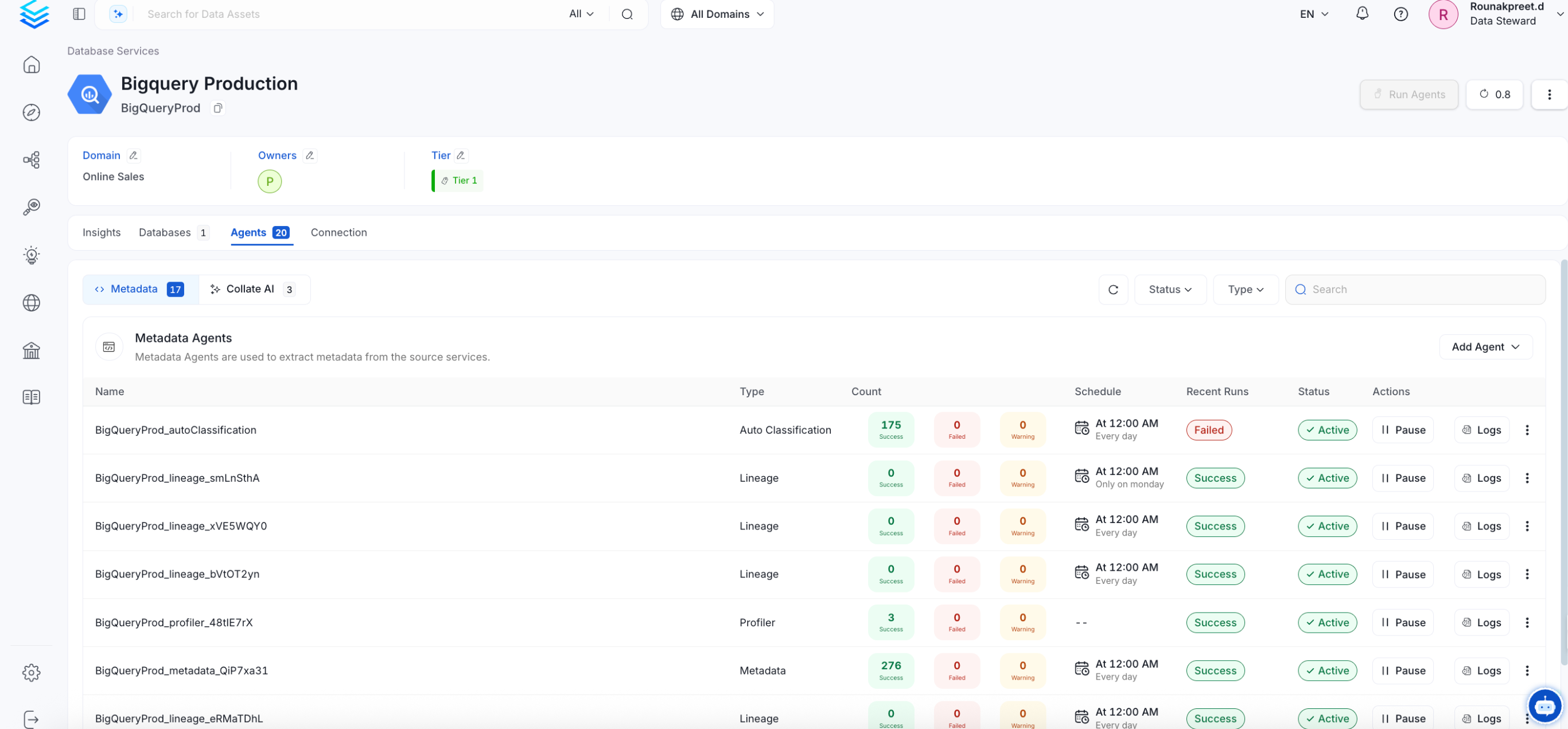
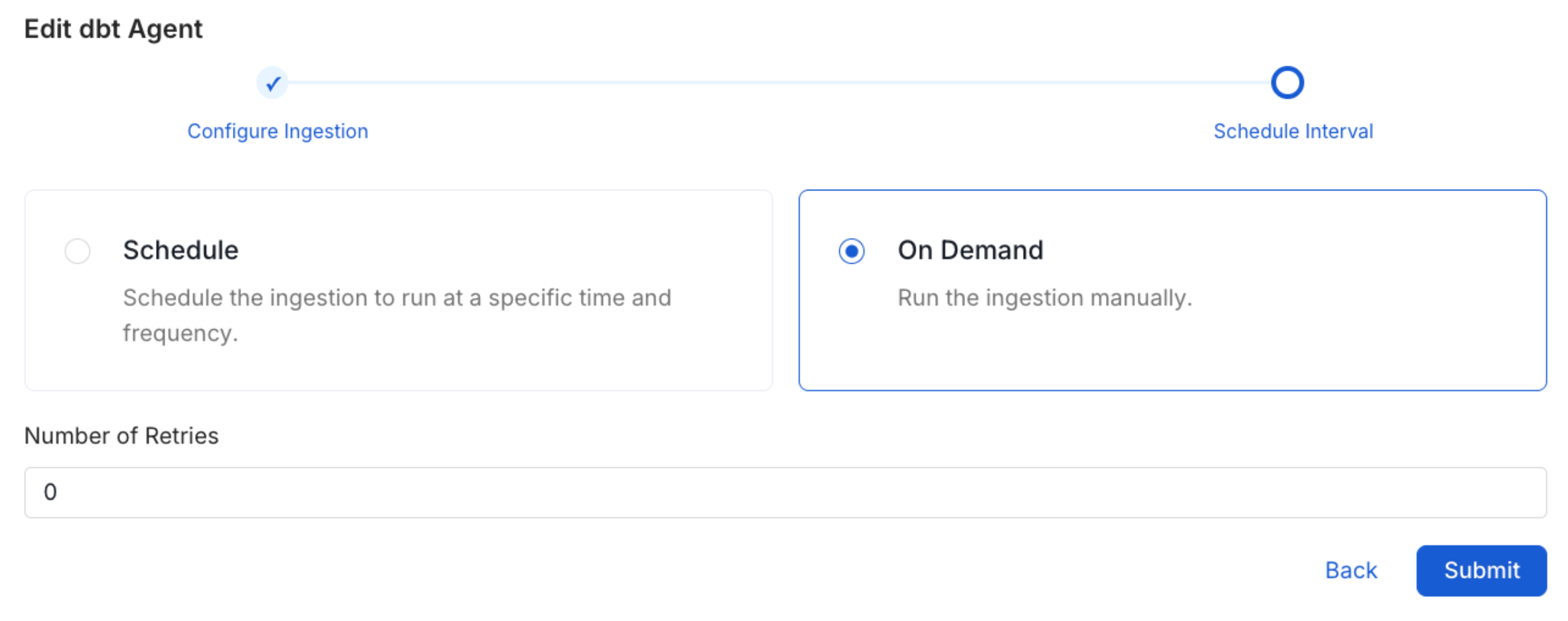 Once the workflow has been successfully deployed, you can view the
Ingestion Pipeline running from the Service Page.
Once the workflow has been successfully deployed, you can view the
Ingestion Pipeline running from the Service Page.
 If [AutoPilot](/how-to-guides/admin-guide/applications/autopilot) is enabled, workflows like usage tracking, data lineage, and similar tasks will be handled automatically. Users don’t need to set up or manage them - AutoPilot takes care of everything in the system.
## Securing Redshift Connection with SSL in OpenMetadata
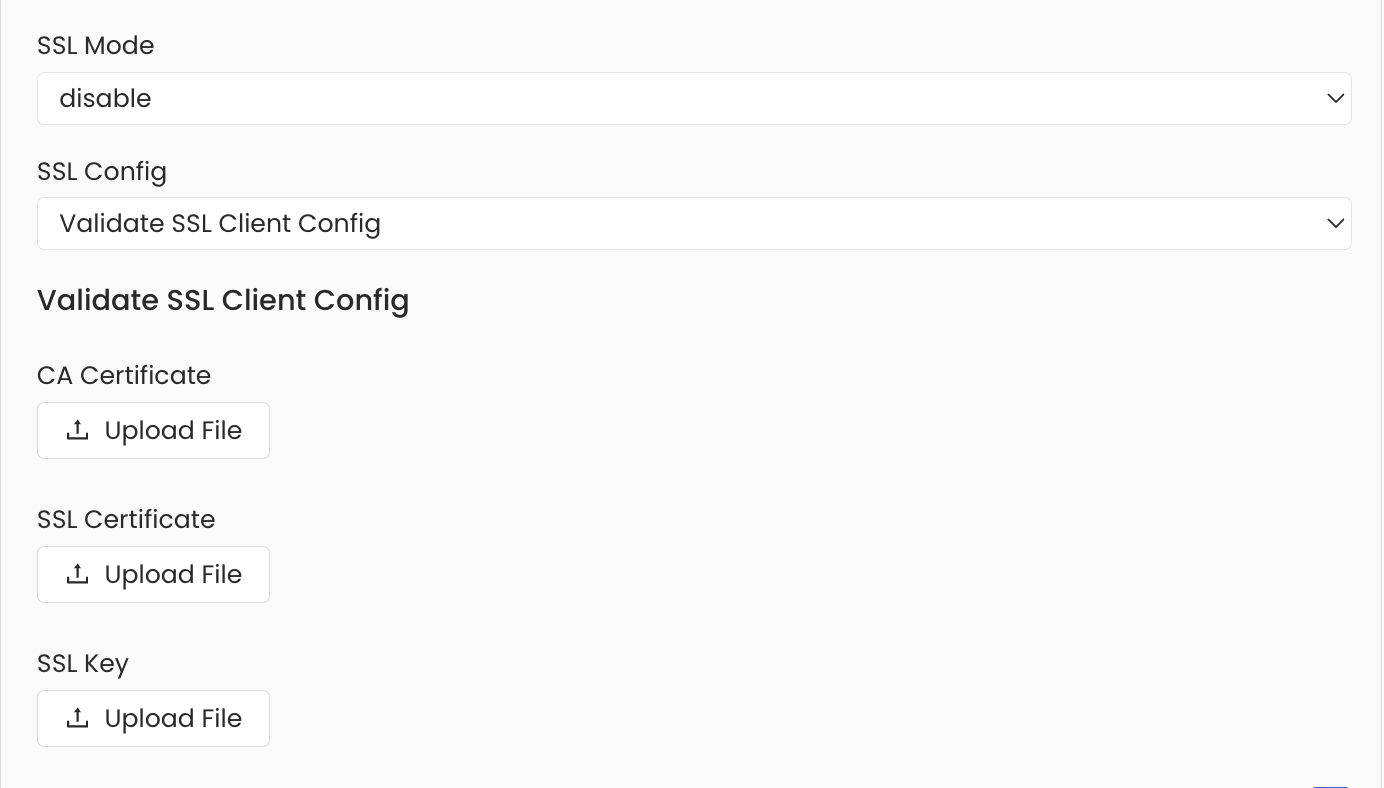
To establish secure connections between OpenMetadata and a Redshift database, you can configure SSL using different SSL modes provided by Redshift, each offering varying levels of security.
Under `Advanced Config`, specify the SSL mode appropriate for your connection, such as `prefer`, `verify-ca`, `allow`, and others. After selecting the SSL mode, provide the CA certificate used for SSL validation (`caCertificate`). Note that Redshift requires only the CA certificate for SSL validation.
If [AutoPilot](/how-to-guides/admin-guide/applications/autopilot) is enabled, workflows like usage tracking, data lineage, and similar tasks will be handled automatically. Users don’t need to set up or manage them - AutoPilot takes care of everything in the system.
## Securing Redshift Connection with SSL in OpenMetadata
To establish secure connections between OpenMetadata and a Redshift database, you can configure SSL using different SSL modes provided by Redshift, each offering varying levels of security.
Under `Advanced Config`, specify the SSL mode appropriate for your connection, such as `prefer`, `verify-ca`, `allow`, and others. After selecting the SSL mode, provide the CA certificate used for SSL validation (`caCertificate`). Note that Redshift requires only the CA certificate for SSL validation.
 ## Troubleshooting
Learn more about how to troubleshoot common Redshift connector issues and resolve configuration or ingestion errors.
## Reverse Metadata
### Description Management
Redshift supports description updates at all levels:
* Database level
* Schema level
* Table level
* Column level
### Owner Management
Redshift supports owner management at the following levels:
* Database level
* Schema level
* Table level
### Tag Management
❌ Tag management is not supported for Redshift.
### Custom SQL Template
Redshift supports custom SQL templates for metadata changes. The template is interpreted using python f-strings.
Here are examples of custom SQL queries for metadata changes:
```sql theme={null}
-- Update column description
COMMENT ON COLUMN {database}.{schema}.{table}.{column} IS {description};
```
The list of variables for custom SQL can be found [here](/how-to-guides/admin-guide/applications/reverse-metadata#custom-sql-template).
For more information about reverse metadata ingestion, see [Reverse Metadata Application](/how-to-guides/admin-guide/applications/reverse-metadata).
### Requirements for Reverse Metadata
In addition to the basic ingestion requirements, for reverse metadata ingestion the user needs:
* `SUPERUSER` privilege to the user
```sql theme={null}
-- Grant superuser privilege to the user
ALTER USER USER_NAME CREATEUSER;
```
* Owners are not ingested during Redshift metadata ingestion, but you can still sync ownership changes back to Redshift using reverse metadata.
* To update owners, the user must be a superuser (requires `CREATEUSER` permission).
* If the user is a superuser, no additional privileges are required.
## Related
Learn more about how to configure the Usage Workflow to ingest Query information from the UI.
Learn more about how to configure the Lineage from the UI.
Learn more about how to configure the Data Profiler from the UI.
Learn more about how to configure the Data Quality tests from the UI.
Learn more about how to ingest dbt models' definitions and their lineage.
## Troubleshooting
Learn more about how to troubleshoot common Redshift connector issues and resolve configuration or ingestion errors.
## Reverse Metadata
### Description Management
Redshift supports description updates at all levels:
* Database level
* Schema level
* Table level
* Column level
### Owner Management
Redshift supports owner management at the following levels:
* Database level
* Schema level
* Table level
### Tag Management
❌ Tag management is not supported for Redshift.
### Custom SQL Template
Redshift supports custom SQL templates for metadata changes. The template is interpreted using python f-strings.
Here are examples of custom SQL queries for metadata changes:
```sql theme={null}
-- Update column description
COMMENT ON COLUMN {database}.{schema}.{table}.{column} IS {description};
```
The list of variables for custom SQL can be found [here](/how-to-guides/admin-guide/applications/reverse-metadata#custom-sql-template).
For more information about reverse metadata ingestion, see [Reverse Metadata Application](/how-to-guides/admin-guide/applications/reverse-metadata).
### Requirements for Reverse Metadata
In addition to the basic ingestion requirements, for reverse metadata ingestion the user needs:
* `SUPERUSER` privilege to the user
```sql theme={null}
-- Grant superuser privilege to the user
ALTER USER USER_NAME CREATEUSER;
```
* Owners are not ingested during Redshift metadata ingestion, but you can still sync ownership changes back to Redshift using reverse metadata.
* To update owners, the user must be a superuser (requires `CREATEUSER` permission).
* If the user is a superuser, no additional privileges are required.
## Related
Learn more about how to configure the Usage Workflow to ingest Query information from the UI.
Learn more about how to configure the Lineage from the UI.
Learn more about how to configure the Data Profiler from the UI.
Learn more about how to configure the Data Quality tests from the UI.
Learn more about how to ingest dbt models' definitions and their lineage.